
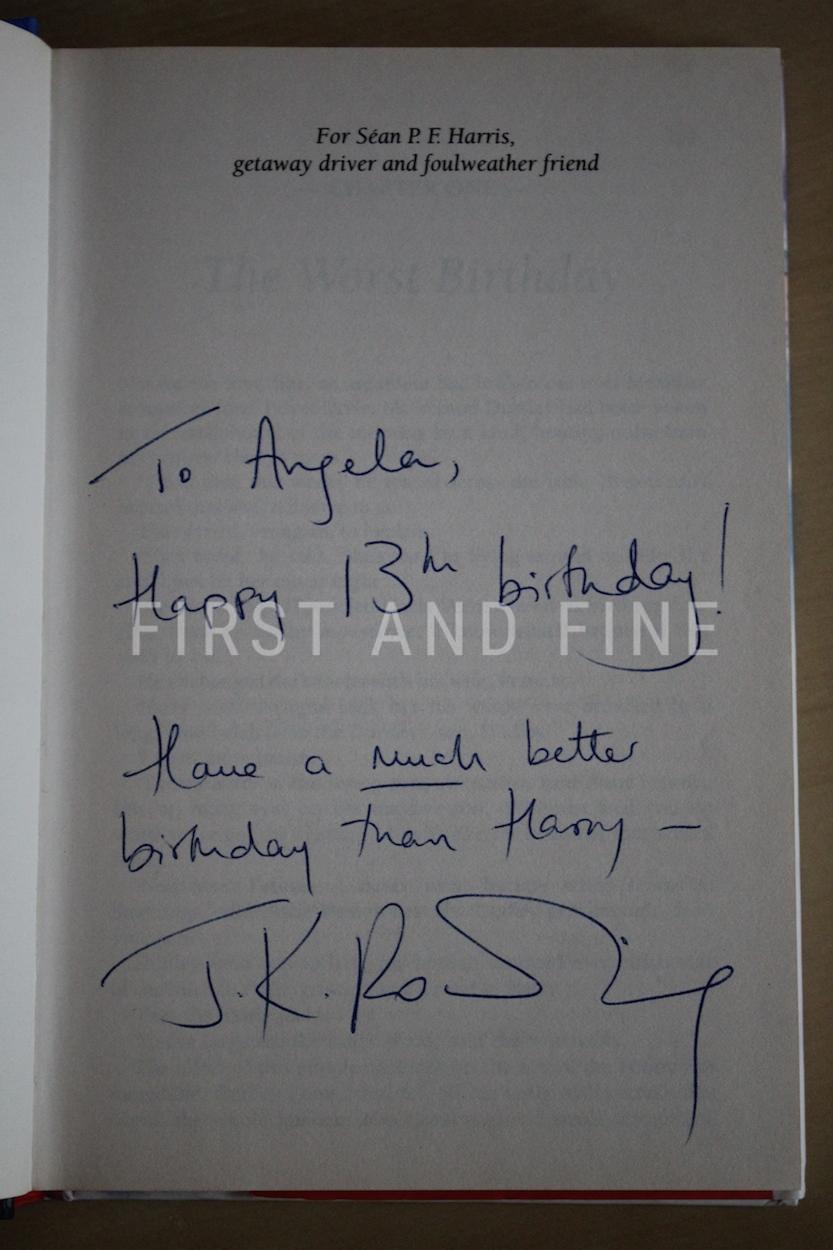
Signed books are much coveted items and inscribed copies are priced at a premium compared to unsigned copies. Unfortunately forgeries are as old as book collecting itself. The more value a signature adds to a book, the greater the temptation for forgers to ‘add value’.
There are a few points that help collectors to evaluate whether signature and inscriptions are likely to be genuine, and which can raise “red flags” to us when buying signed books .
First, does the signature and inscription match known examples of the author in question? At the same time, was ink used or could it be autopen (a computer/ machine generated signature)? It helps having the necessary experience in the field to spot both of these.
Second, is the book flat signed (signature only) or has it been inscribed? Needless to say forging a signature and handwriting is more laborious and difficult and therefore inscribed copies have a better chance of being genuine.
Third, is the author being forged? Landmark authors are more frequently forged. Ernest Hemingway signatures and inscriptions are quite often forgeries. More recently J.K. Rowling’s Harry Potter books have attracted so much media attention that there are more forgeries out there than genuine specimens.
Fourth, does the signature represent most of the value of the book? A UK hardback first impression of Harry Potter and the Philosopher’s Stone in nice condition will fetch well over fifty thousand Pounds as of 2023 even without a signature. We have never seen a copy with a forged signature as the cost to obtain one would be too risky for the forger. The vast majority of “signed” Harry Potter and the Half-Blood Prince on the market, however, are forgeries as there are millions of first editions and they are easily obtainable.
Fifth, who is the seller? Reputable auction houses and booksellers risk their reputation if it becomes known that they sell forgeries. Some larger Internet platforms generate their income by charging sellers a percentage and are therefore reluctant to take down forgeries even though those are being reported as fakes. Anybody can create an account on an internet platform with relatively little risk – they can simply close and open a new account if an issue is raised.
Some signed books and documents on the market are offered with a so-called Certificate of Authenticity (CoA). These should be treated with caution. In our experience these only give you provenance in terms of who the last seller was and does not necessarily mean that the item is authentic. There is no formal internationally recognised process for authenticating a book or signature and it is all to easy to print a form and call it a COA. Generally we recommend to avoid copies where any of the red flags are present even if a certificate of authentication is available.
A signed book is certainly a joy to own, but buying a forgery can be a costly exercise, so our advice is to buy with care and only when you are certain that the signature is genuine.