










Milne, A.A. (1926) ‘Winnie-the-Pooh’, UK first edition in first state dust jacket and signed original letter
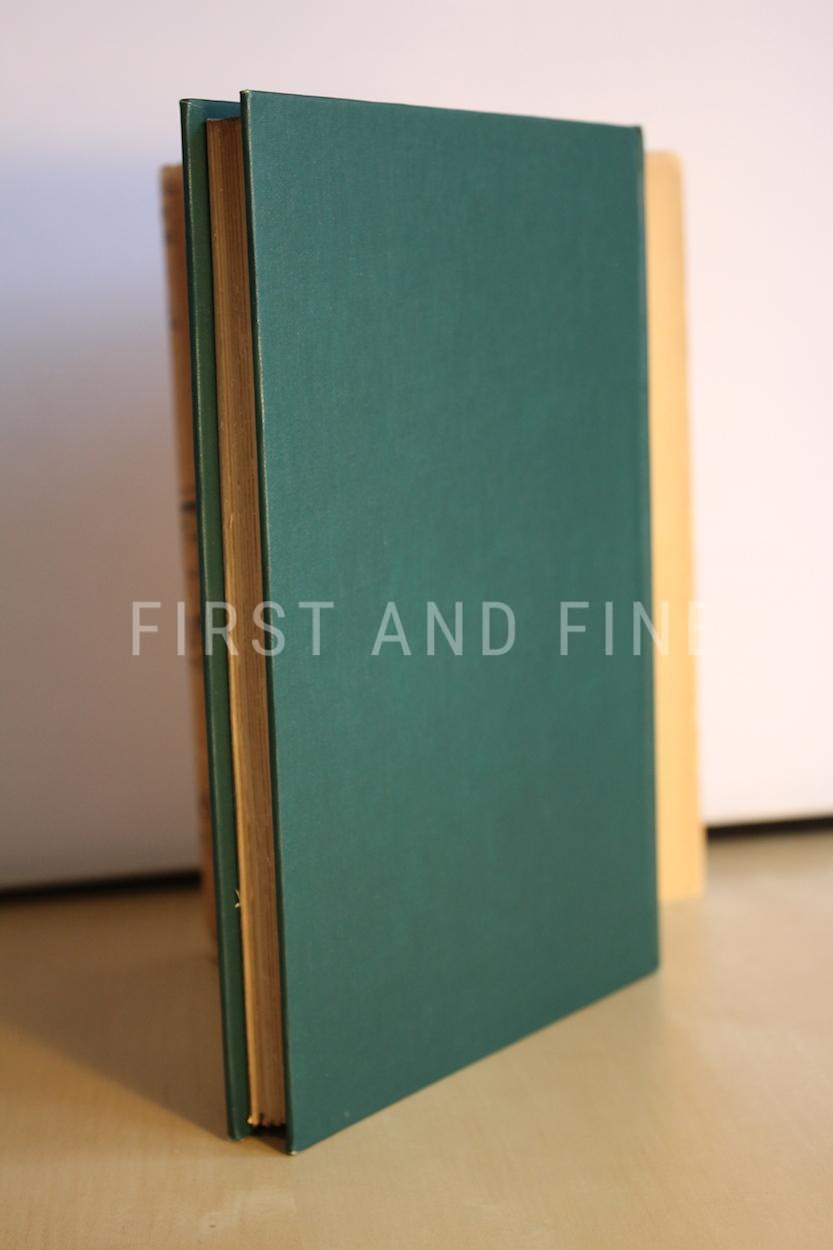
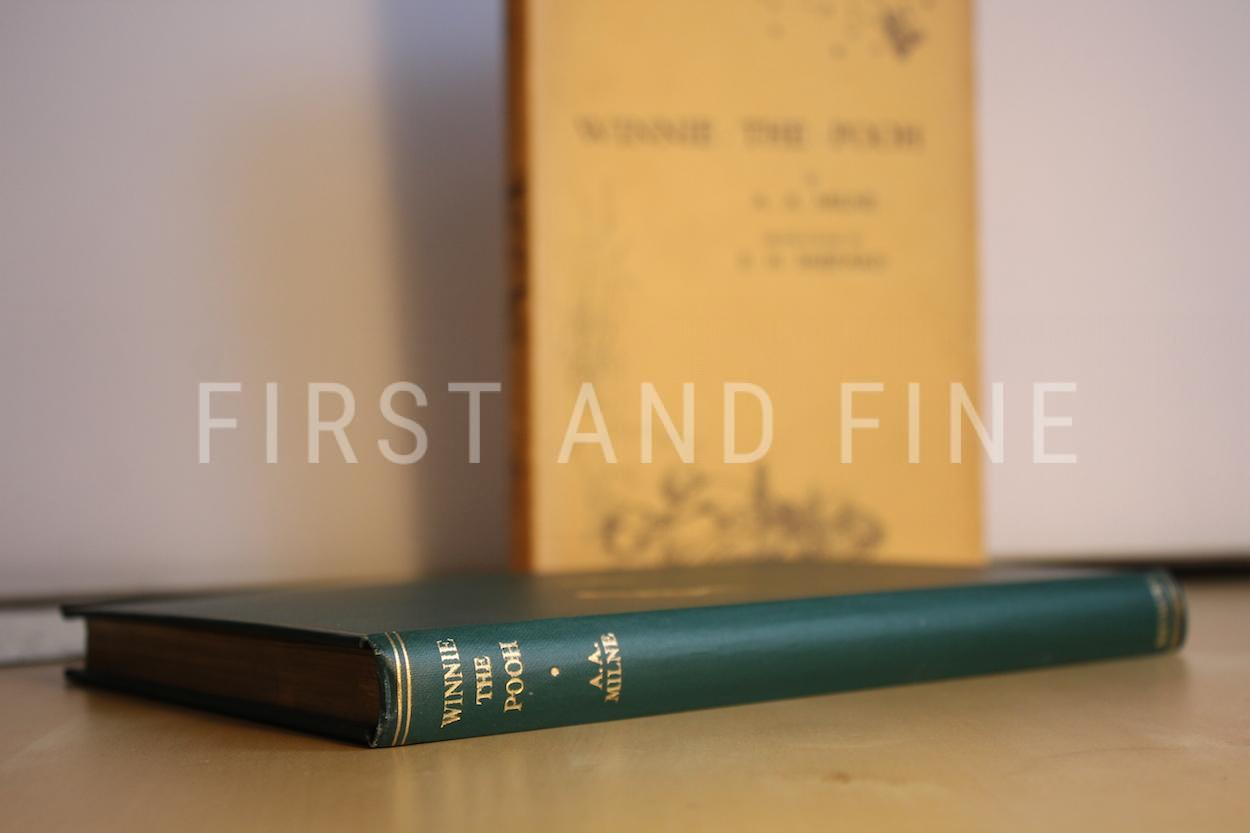
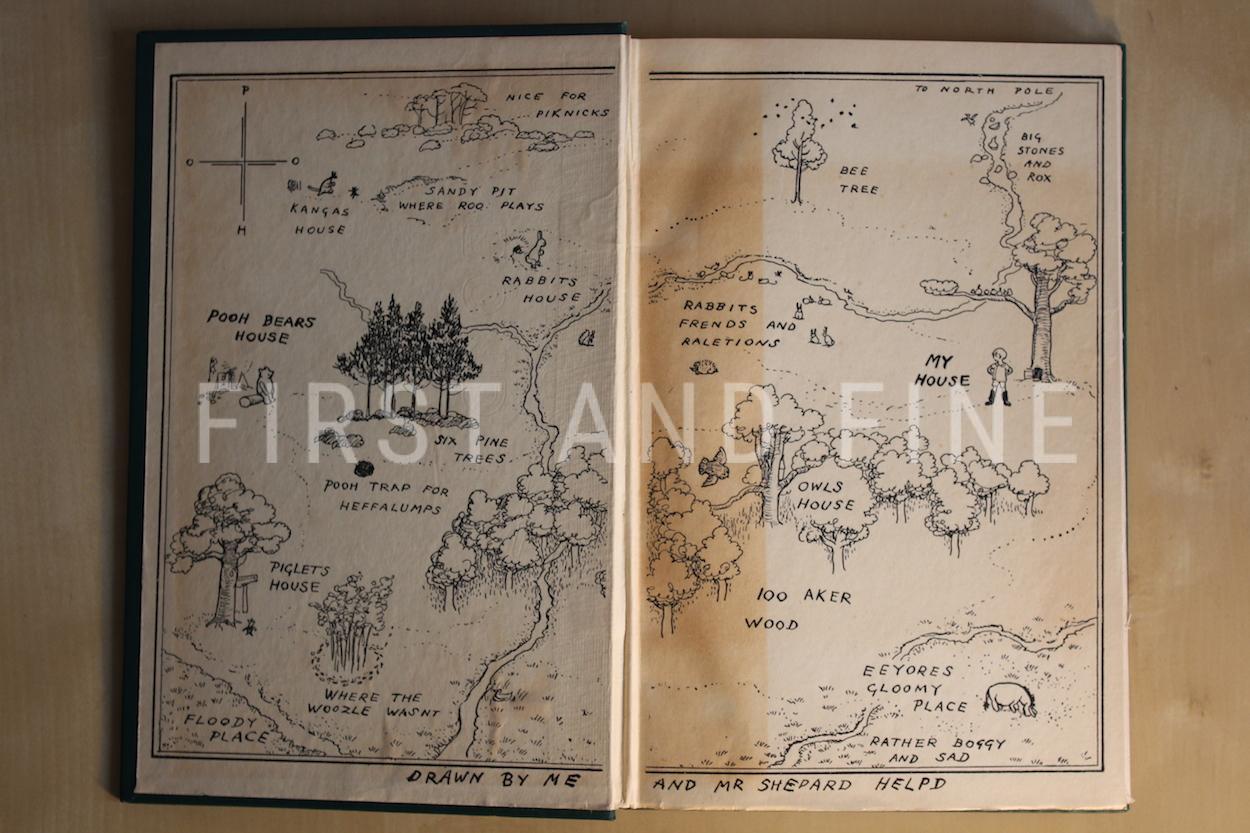
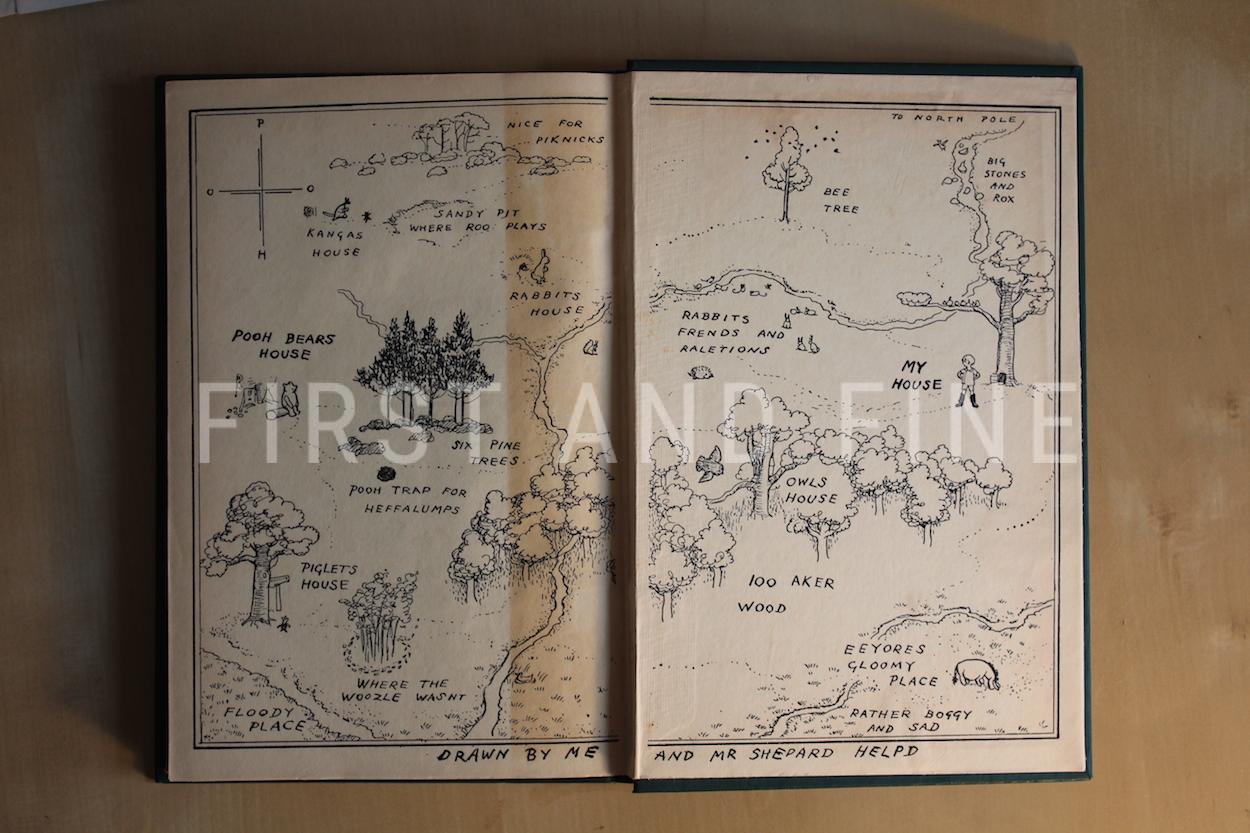
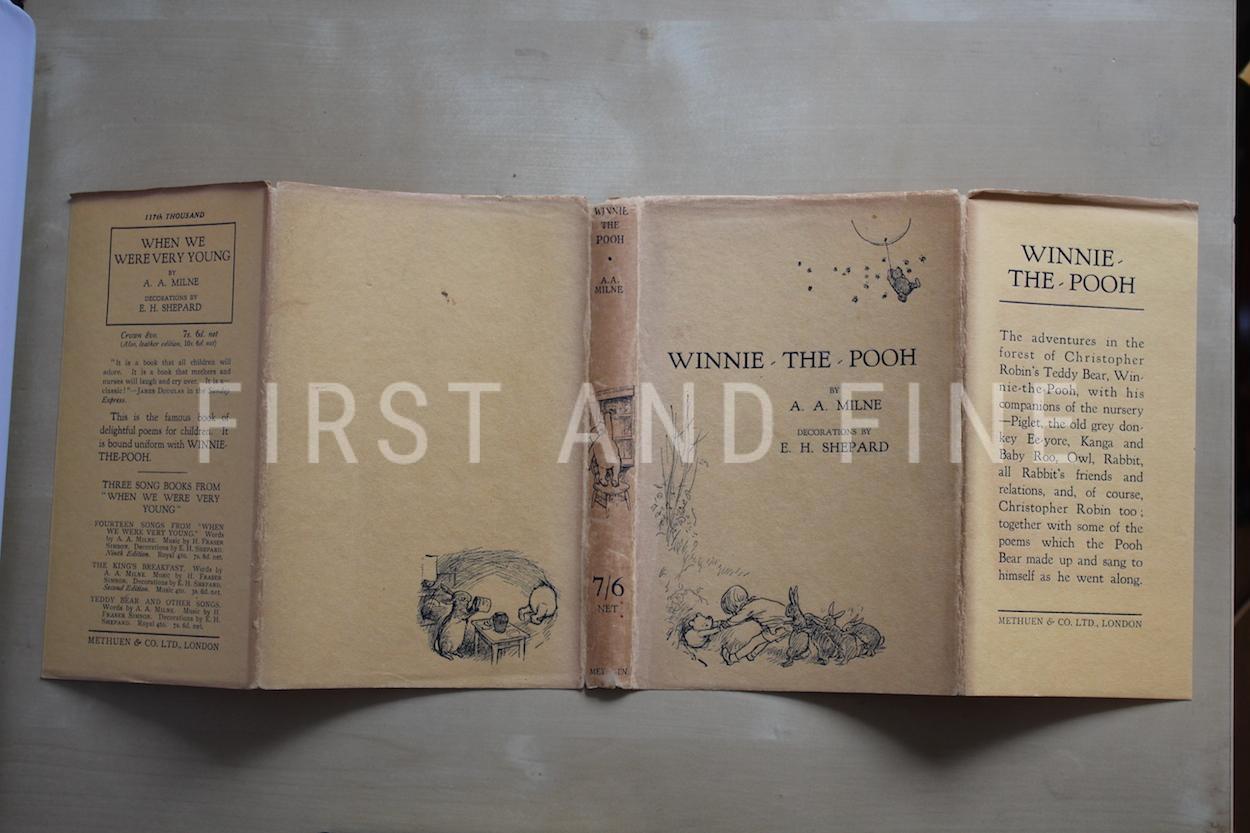
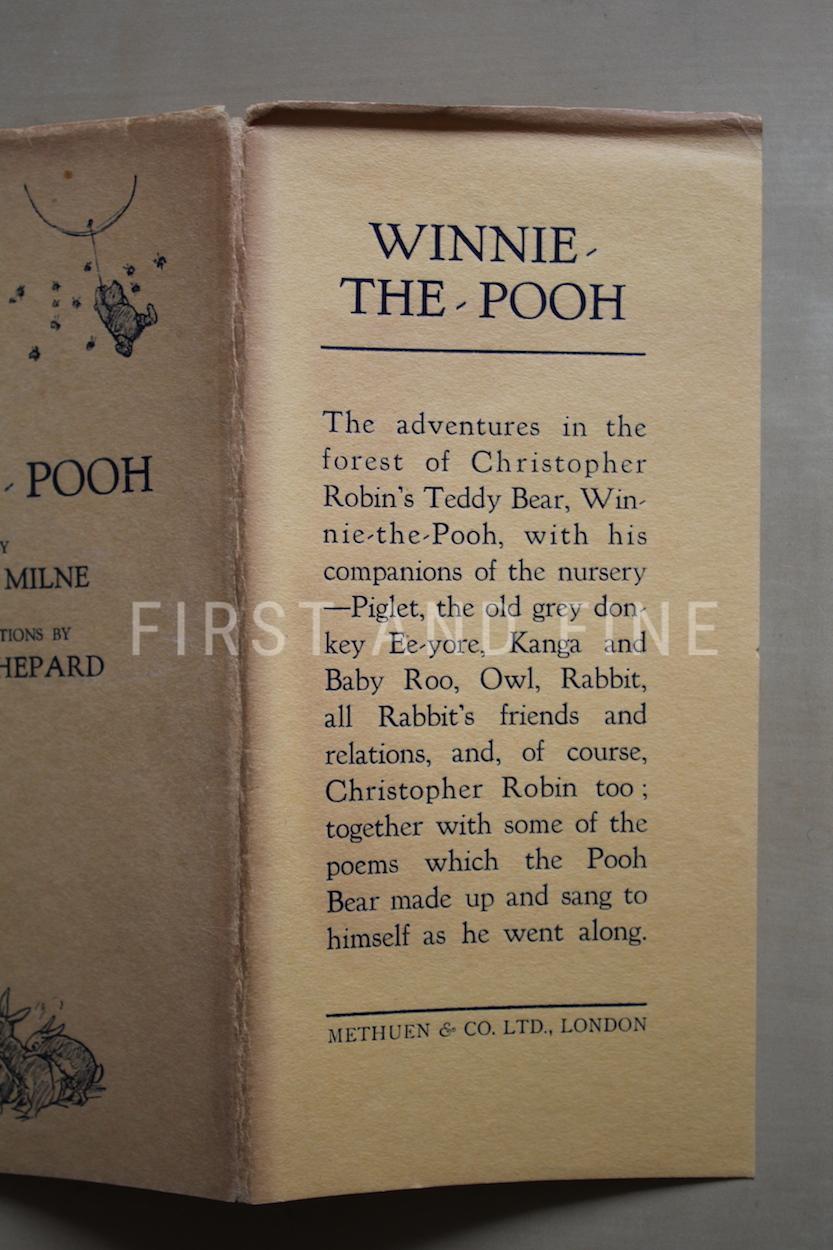
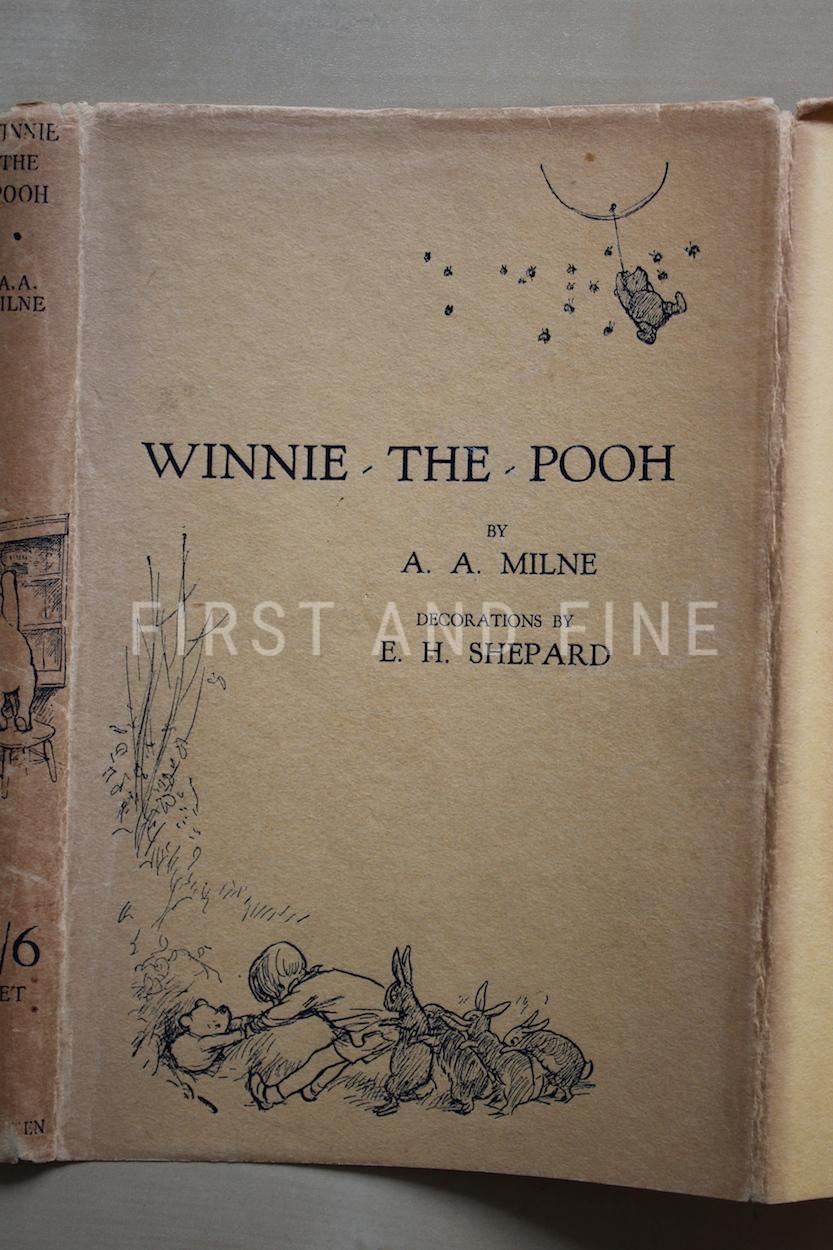
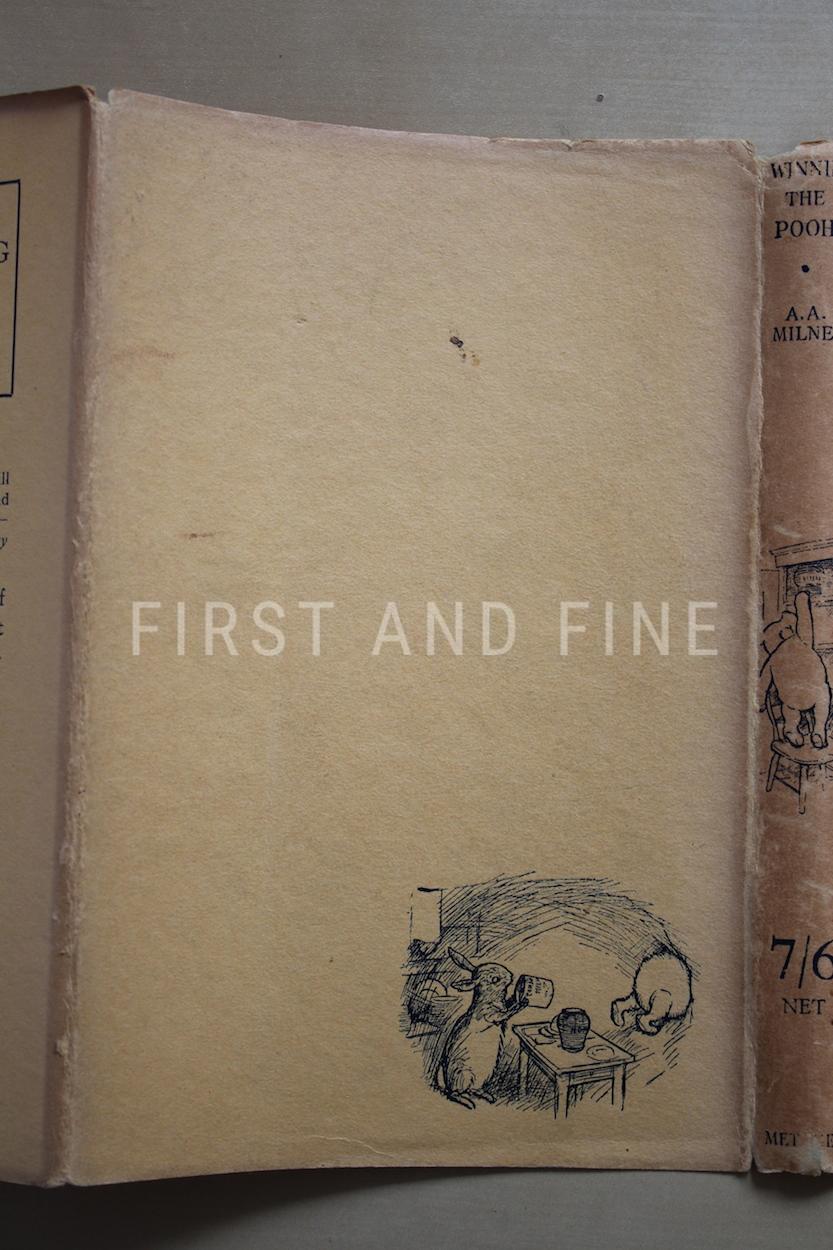
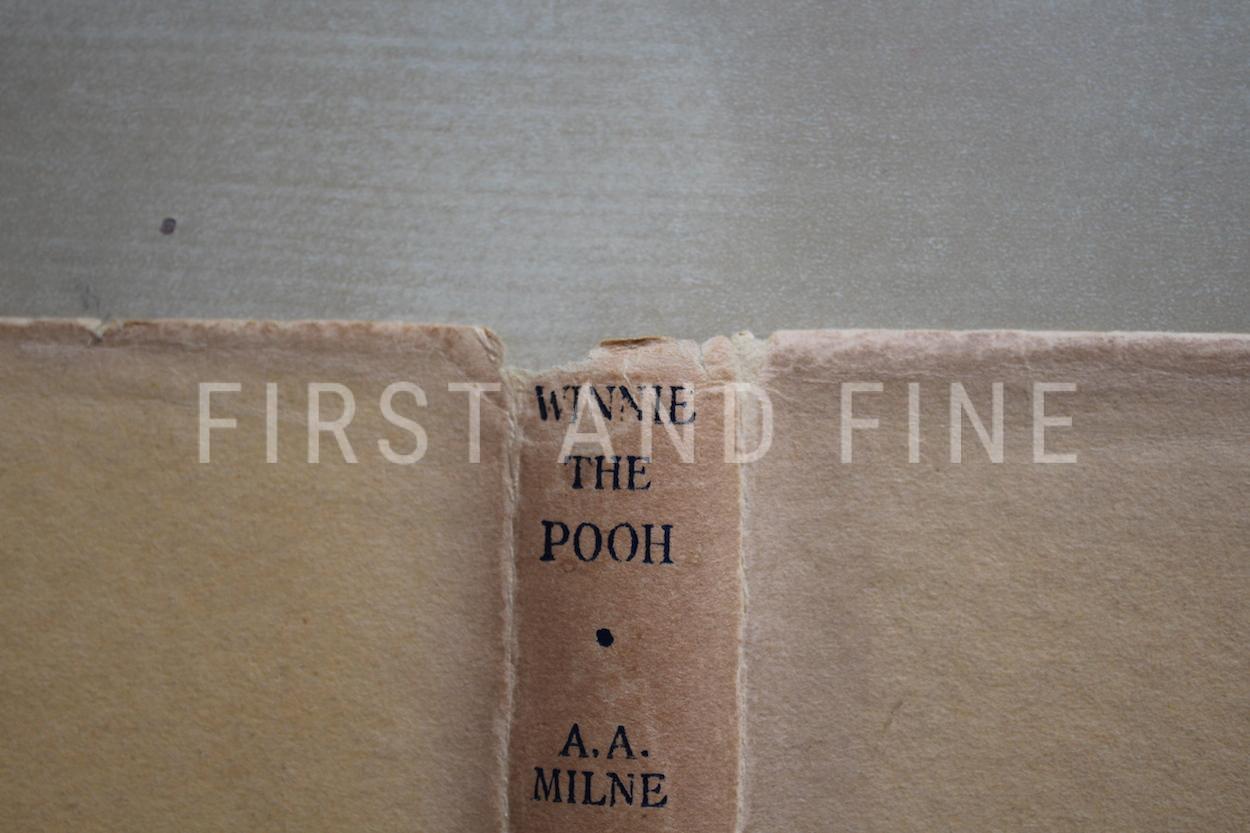
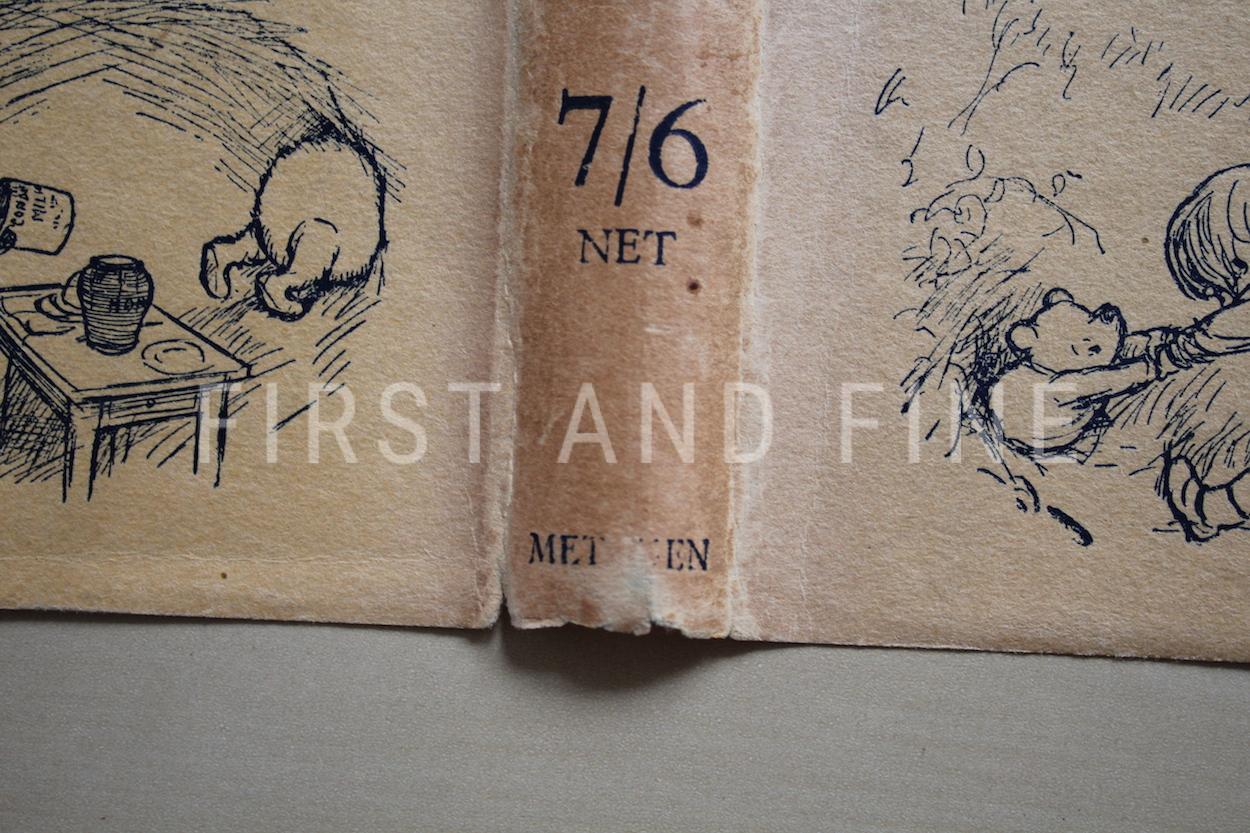
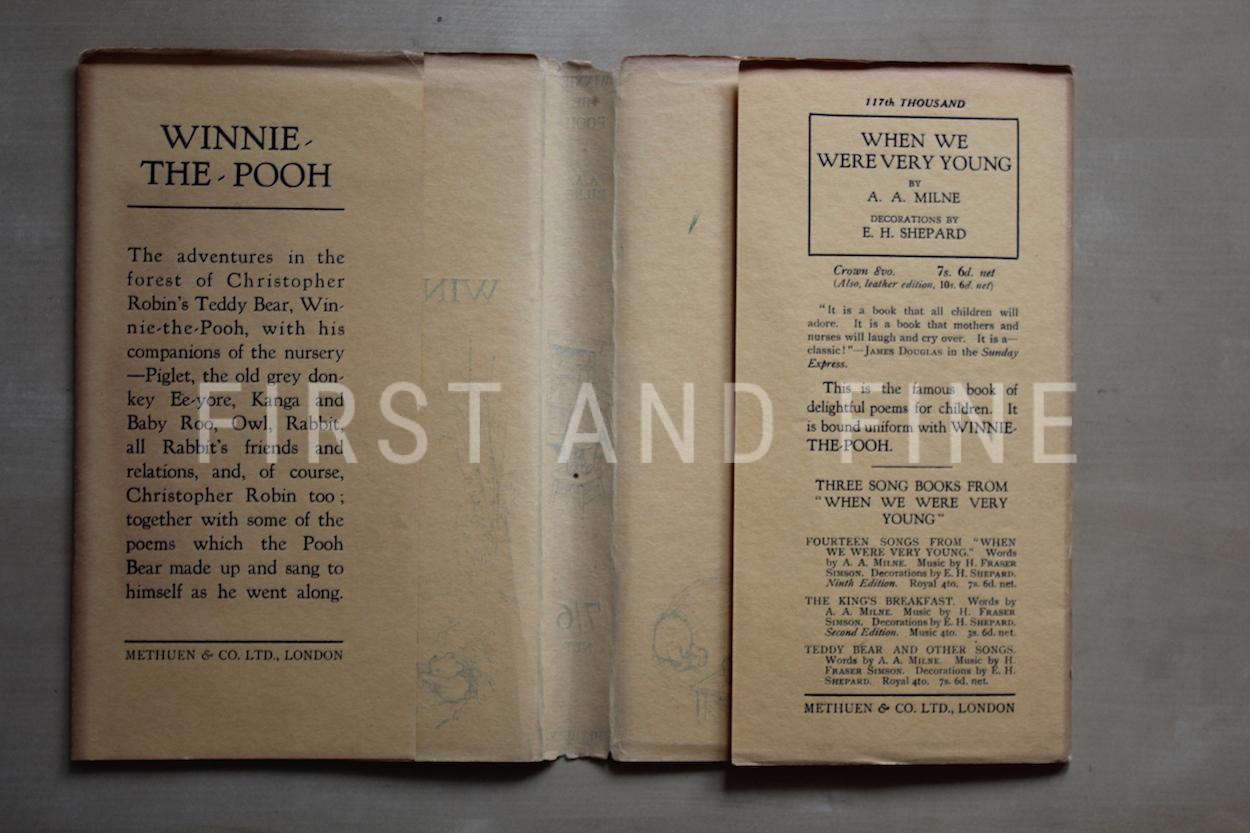
Alan Alexander Milne (1926) ‘Winnie-the-Pooh‘, UK first edition, first printing, published by Methuen. One of 30,000 first edition copies printed. Green cloth binding with charming E. H. Shepard’s illustrations. Pooh and Christopher Robin stamped in gilt to the front board. First state yellow pictorial dust jacket with 117th thousand printed on the back flap and 7/6 net pricing on the spine as called for. The front and rear papers are illustrated with a map of the “100 Aker Wood”. A beautiful copy of one of the most loved and seminal children books of all time. In addition, an original handwritten and signed letter by Milne to his lifelong firend Vincent Seligman, dated from 1920
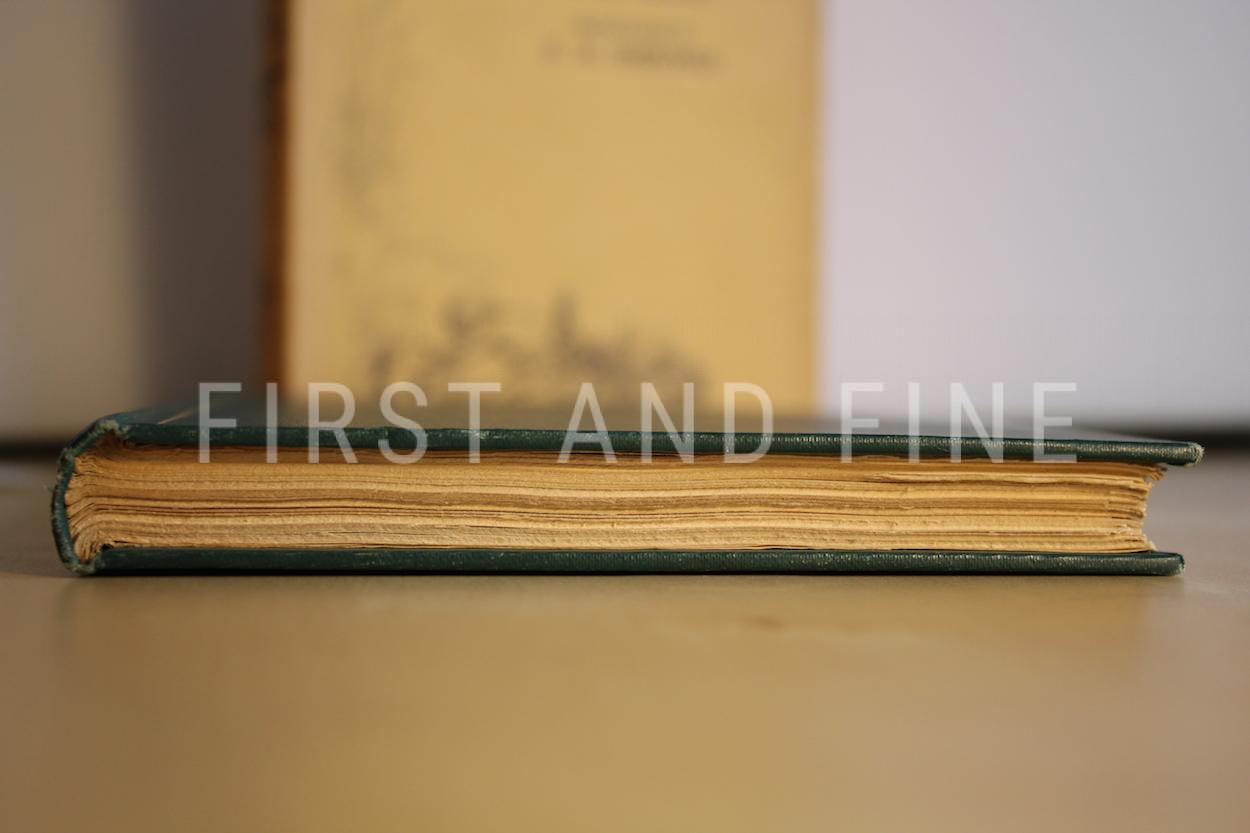
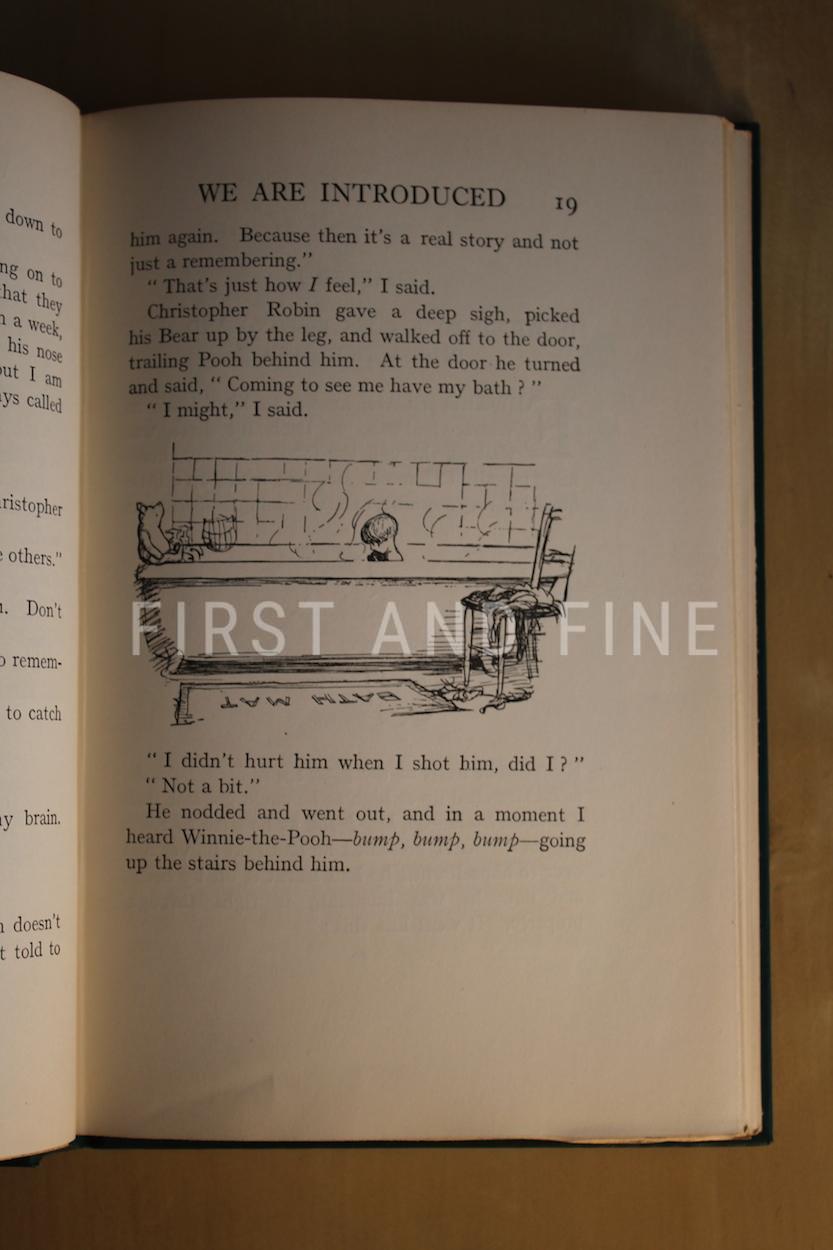
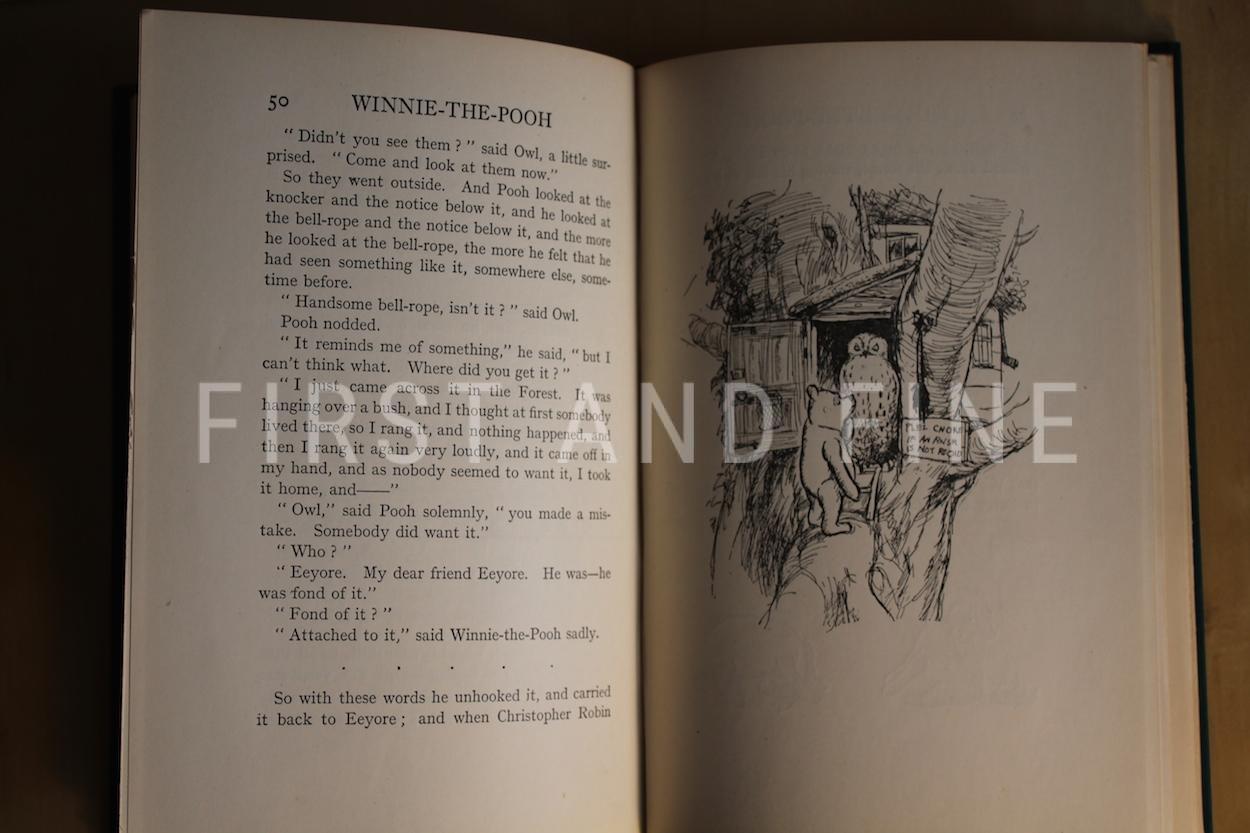
Condition of the book: a near fine copy in a near fine, and crucially, unrestored first state dust jacket. There are no previous owners’ scribbles of any sorts in the book. One discreet bookseller ticket at the inner margin of the ffep opposite the half-title page. The boards are clean and not bumped, the top edge gilding vibrant. The stamped gilt on front and spine is NOT rubbed out. Usual ghost marks to the ffeps as common sine the dust jacket leaves a little room for the air to touch the ffep not covered by the flaps. Very slight and minor shelf wear to botton board edges from sliding in and out of the shelf. The dust jacket is a beauty and seldom found in this condition at this price. The yellow colour of the wrapper is vibrant, the spine is only slightly discoloured (usually the spine os either completely faded or very browned); no soiling as often encountered with most specimens. Minor edge wear including a small chip to top spine and a rub at the foot of the spineas shown. No restorations of any sorts, no tapes, no glue etc. A really lovely example of both book and jacket.
The letter:
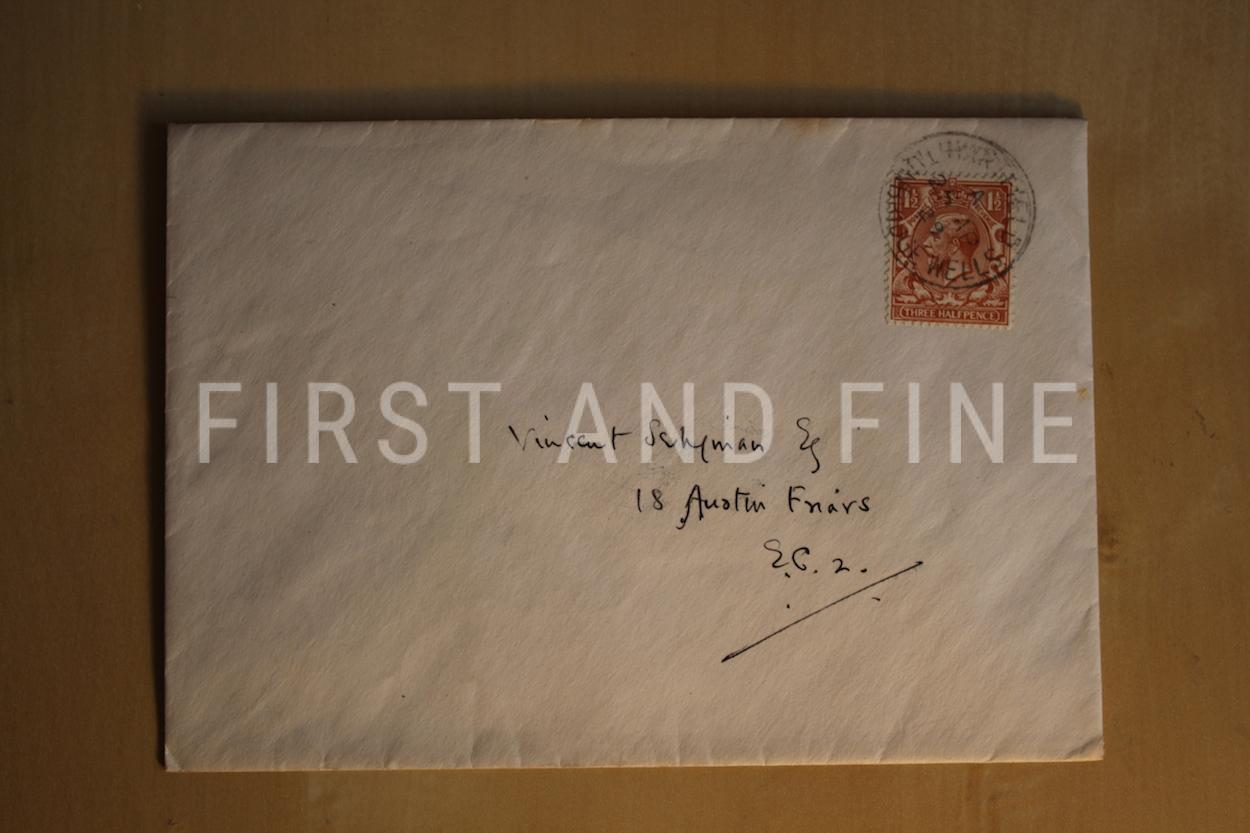
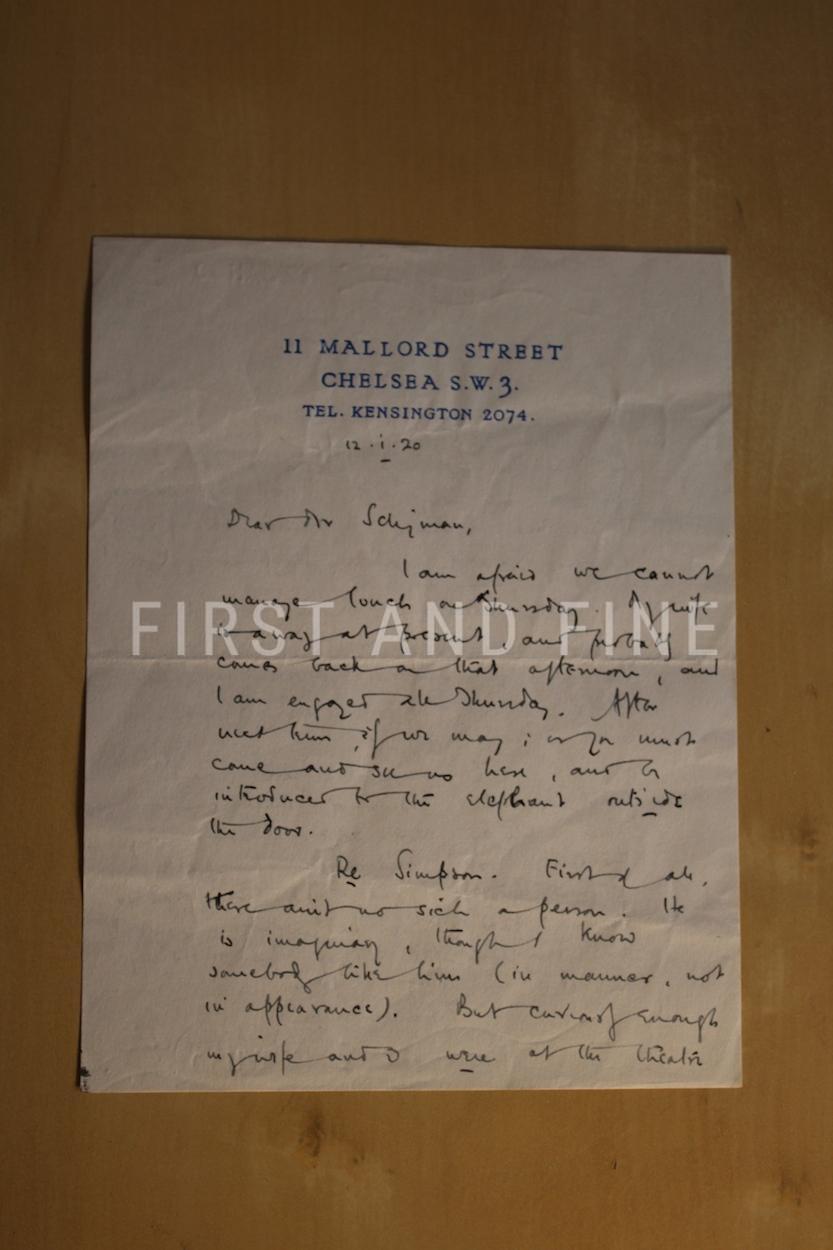
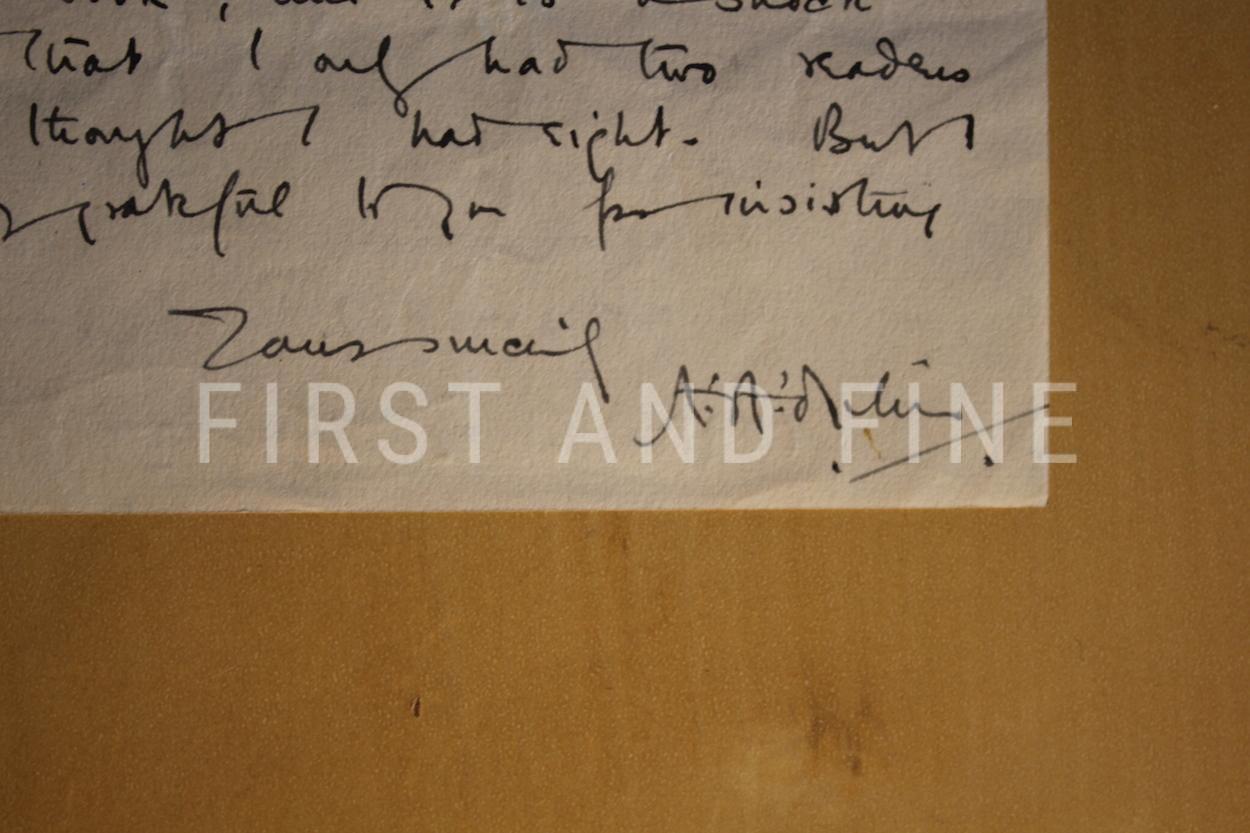
Single page ALS, signed in full signature “A.A. Milne” and dated “12. 1. 20” (January 12, 1920), 4.5″ x 5.75″ on stationary with letterhead of 11, Mallord Street, Chelsea, S.W.3. Tel Kensington 2074. Expected center fold. Very soft rippling to the page. Near fine. Included is the envelope with Seligman’s address handwritten by Milne.
“12 . 1 . 20
Dear Mr. Seligman,
I am afraid we cannot manage lunch on Thursday. My wife is away at present, and probably comes back on that afternoon and I am engaged (illegible) Thursday. After … if we may; or you must come and see us then and be introduced to the elephant outside the door.
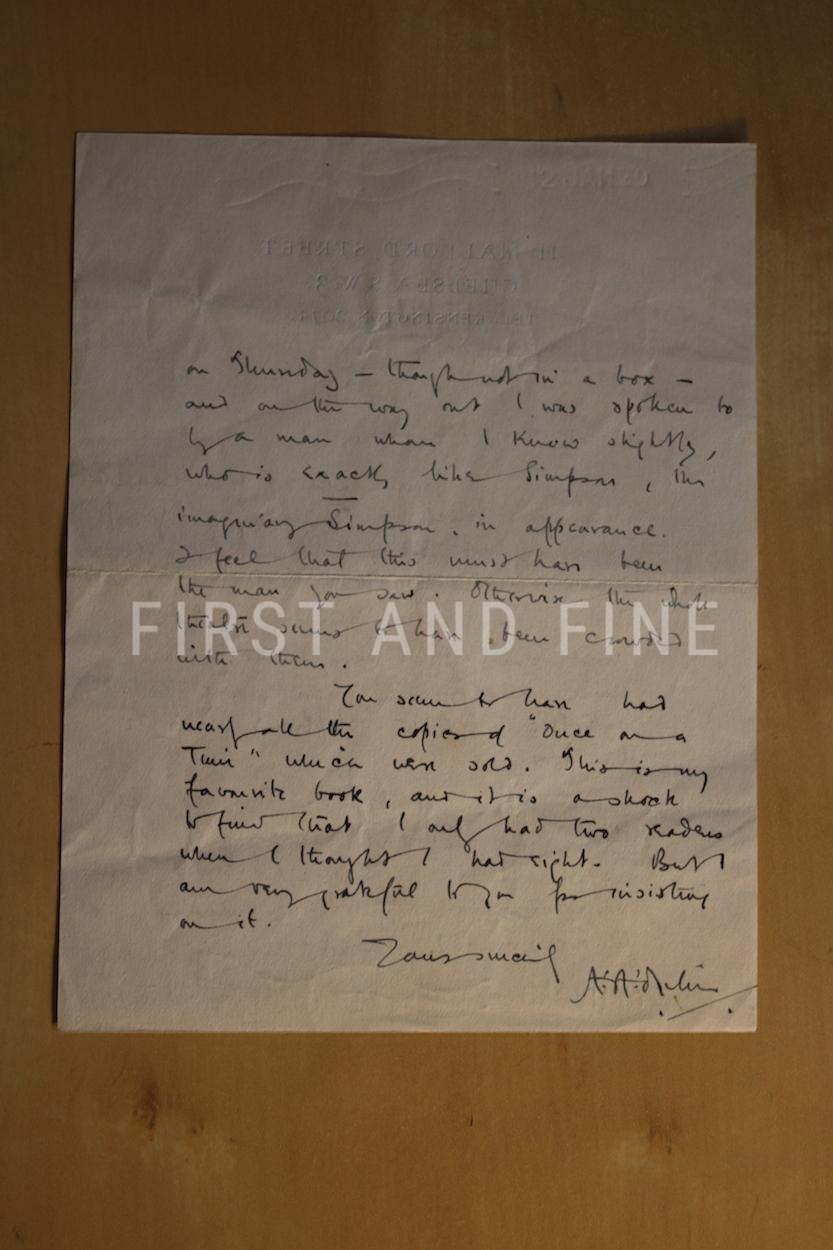
Re. Simpson. First … he is imaginary, though I know somebody like him (in manner, not in appearance). But curiously enough my wife and I were at the theatre on Thursday – though not in a box- and on the way out I was spoken to by a man whom I know slightly who is exactly like Simpson, this imaginary Simpson, in appearance. I feel that this must have been the man you saw. Otherwise the whole theatre seems to have been crowded with them.
You seem to have had (illegible) the copies of “Once on a Time” which were sold. This is my favorite book, and it is a shock to find that I only had two readers when I thought I had eight. But I am very grateful to you for insisting on it.
Yours sincerely,
A.A. Milne”
Before Christopher Robin and Milne’s children series of adventures of Winnie The Pooh, Milne dabbled with an earlier novel he in part considered as a work for children, whoever one which could also be enjoyed by adults. In his letter to Vincent Seligman, who became a life long friend spanning his adult lifetime, Milne displays his typical jocular humor about his new children’s novel, “One on a Time”, published in 1917 by Hodder and Stoughton. He jovially pokes fun at himself when notes to Seligman, “You seem to have had nearly all the copies of “Once on a Time” which were sold. This is my favorite book, and it is a shock to find that I only had two readers when I thought I had eight.” Milne heavily critiqued this book, and was known to have even said “This is an odd book” and indeed it is very difficult to classify. Ostensibly a typical fairytale, it tells the story of the war between the kingdoms of Euralia and Barodia and the political shenanigans which take place in Euralia in the king’s absence, all supposedly rewritten by Milne from the writings of the fictional historian “Roger Scurvilegs”.
This letter marks the early beginnings of the making of one of the most famous children’s authors of the 20th century!
Milne created “Once on a Time” to contain believable, three-dimensional characters, rather than the stereotypes which will satisfy children. Hence the book introduces us to a princess who is far from helpless; a prince who, whilst handsome, is also pompous and vain; an enchantment which is almost entirely humorous; a villain who is not entirely villainous and receives no real comeuppance; a good king who isn’t always good; an evil king who isn’t always evil, and so on. The result is a book which children may not enjoy as much as adults. The book was written by Milne partly for his wife, upon whom the character of the Countess Belvane was partially based.
He was known to grapple with the definition of a children’s book, and philosophical about what exactly constitutes the definition of a children’s book, including “Once on a Time”.
Milne was known to have said “Is it a children’s book? Well, what do we mean by that? Is The Wind In The Willows a children’s book? Is Alice in Wonderland? Is Treasure Island? These are masterpieces which we read with pleasure as children, but with how much more pleasure when we are grown-up. In any case, what do we mean by “children”? A boy of three, a girl of six, a boy of ten, a girl of fourteen – are they all to like the same thing? And is a book “suitable for a boy of twelve” any more likely to please a boy of twelve than a modern novel is likely to please a man of thirty-seven; even if the novel be described truly as “suitable for a man of thirty-seven”? I confess that I cannot grapple with these difficult problems. But I am very sure of this: that no one can write a book which children will like, unless he write it for himself first. That being so, I shall say boldly that this is a story for grown-ups. […] But, as you see, I am still finding it difficult to explain just what sort of book it is. Perhaps no explanation is necessary. Read in it what you like; read it to whomever you like; be of what age you like; it can only fall into one of the two classes. Either you will enjoy it, or you won’t.”
Little did Milne know at the time just how much he would come to dominate children’s literature, with no worries about just how many copies were to be sold and read.
A landmark book with a fantastic original letter.
| Weight | 1.2 kg |
|---|
Sold
Out of stock
Related products
-
Rowling, J.K. (1998) ‘Harry Potter and the Chamber of Secrets’, UK signed and inscribed first edition
£8,000.00 -
Rowling, J.K. (1997) ‘Harry Potter and the Philosopher’s Stone’, UK true first edition in paperback with original signed Rowling card
£25,000.00 -
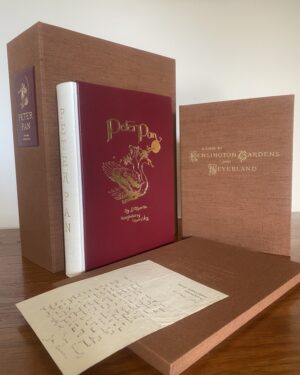
Barrie, J.M. (2024) ‘Peter Pan’, deluxe fine press limited edition with a signed J.M. Barrie letter
£4,000.00 -
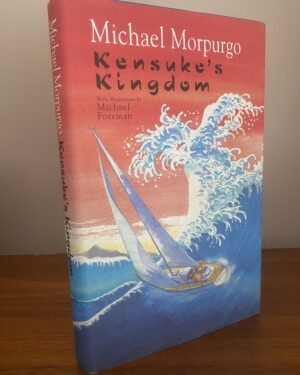
Morpurgo, Michael (1999) ‘Kensuke’s Kingdom’, UK signed and beautifully inscribed first edition
£500.00