







Milne, Alan Alexander (1927) ‘Now We Are Six’, UK deluxe first edition with handwritten letter by A.A. Milne
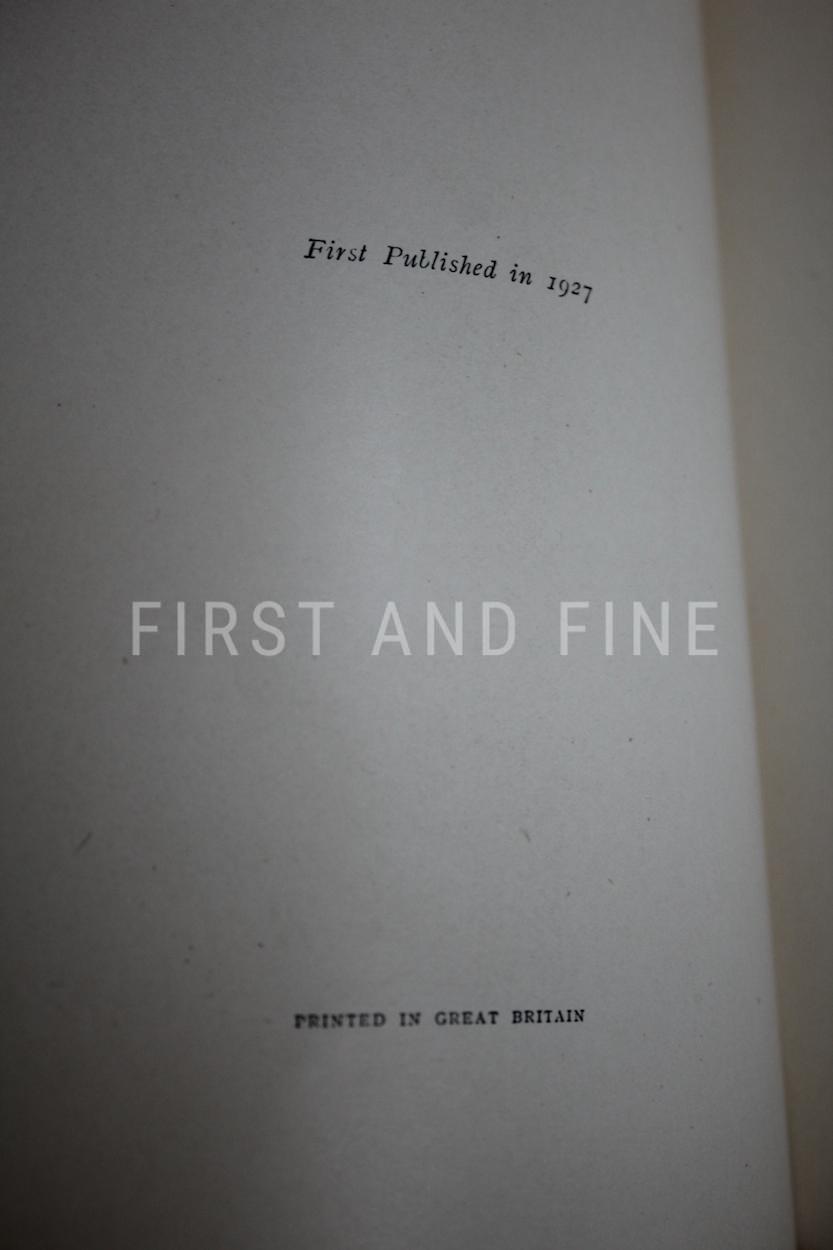
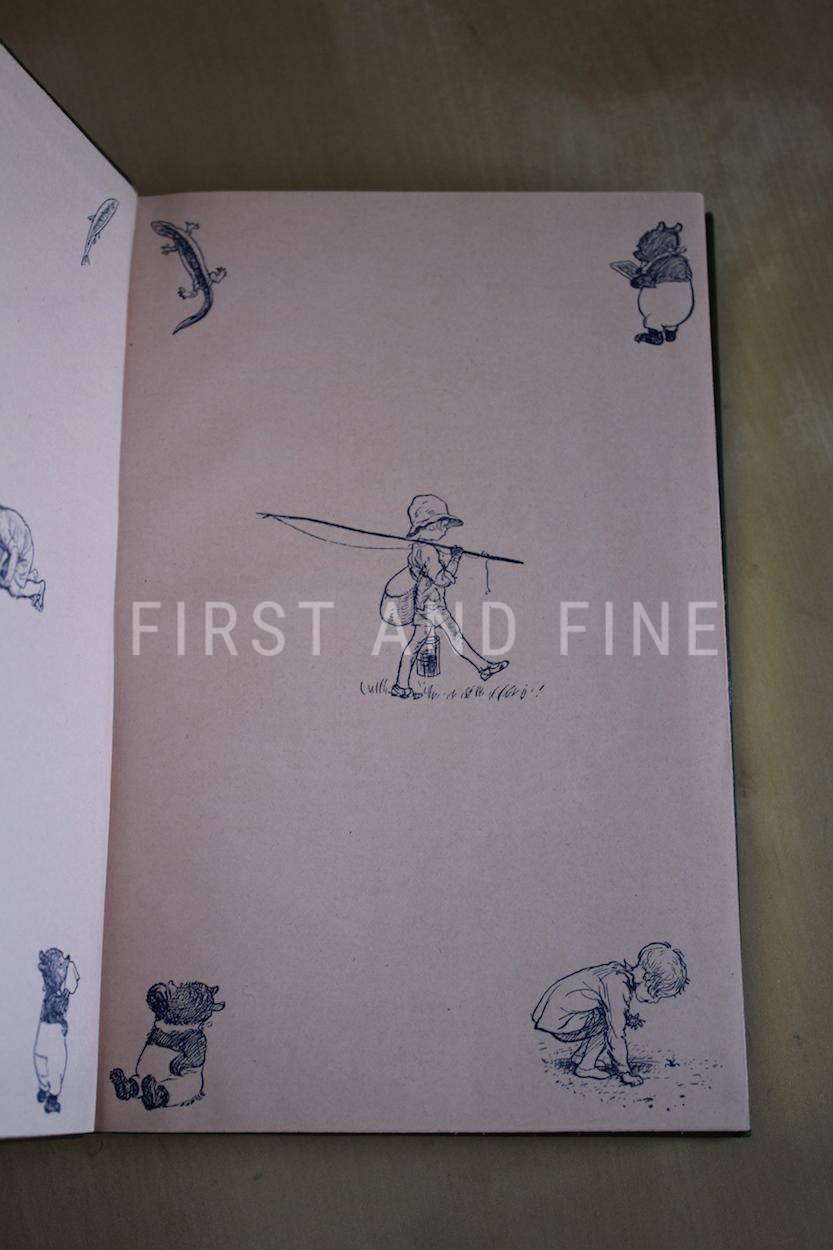
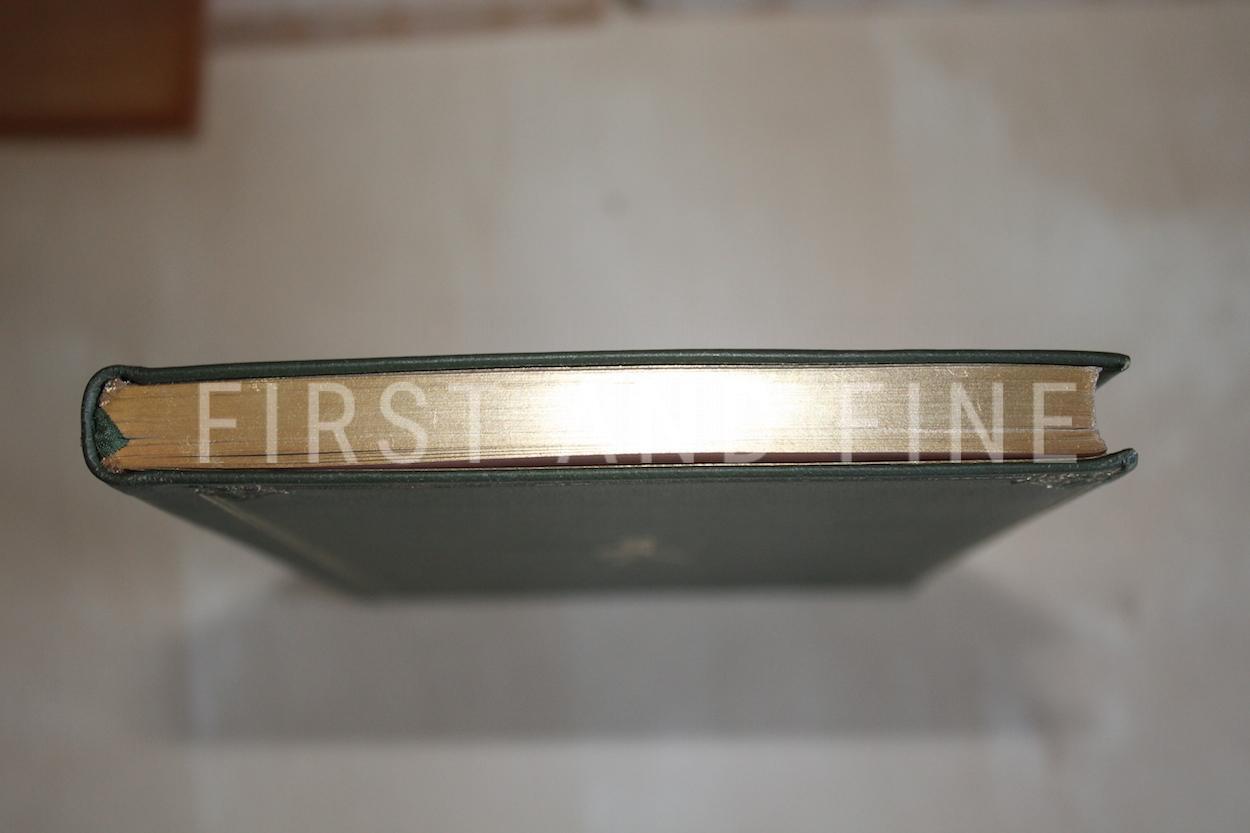
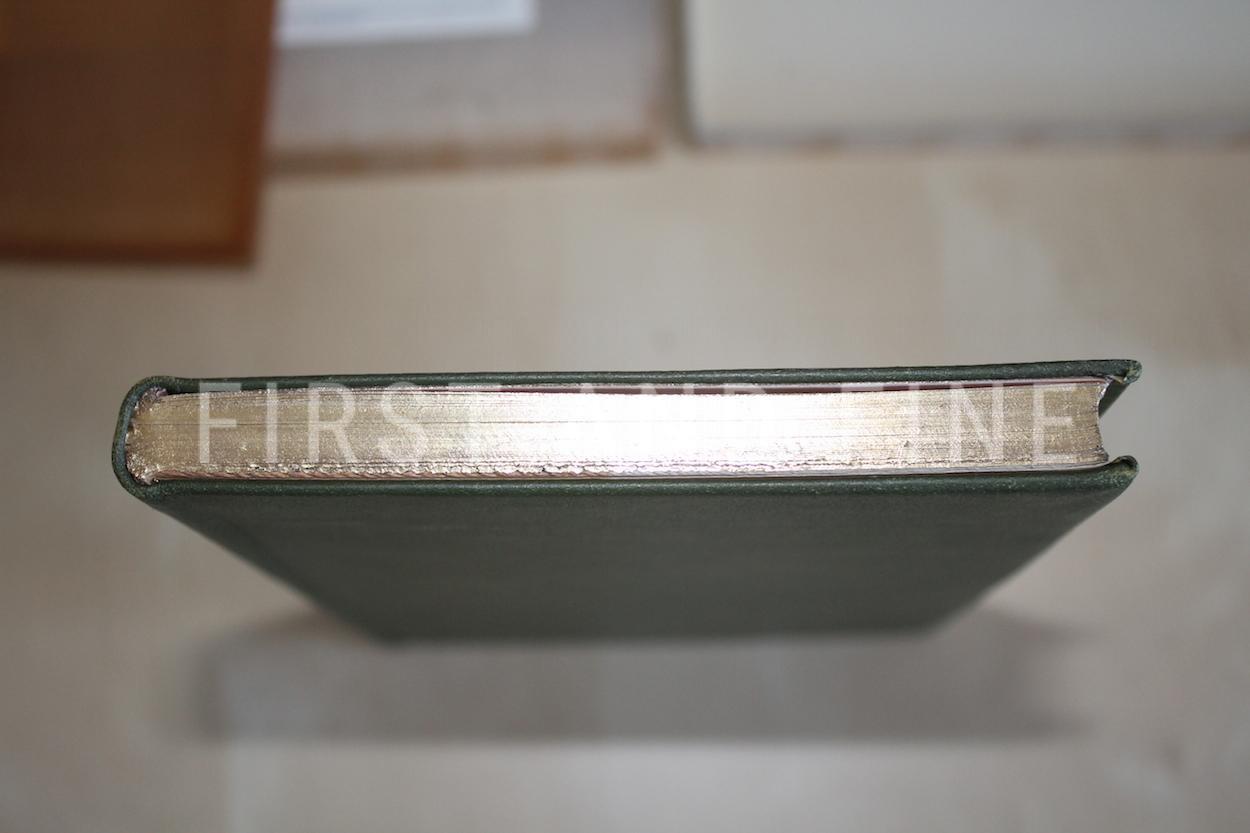
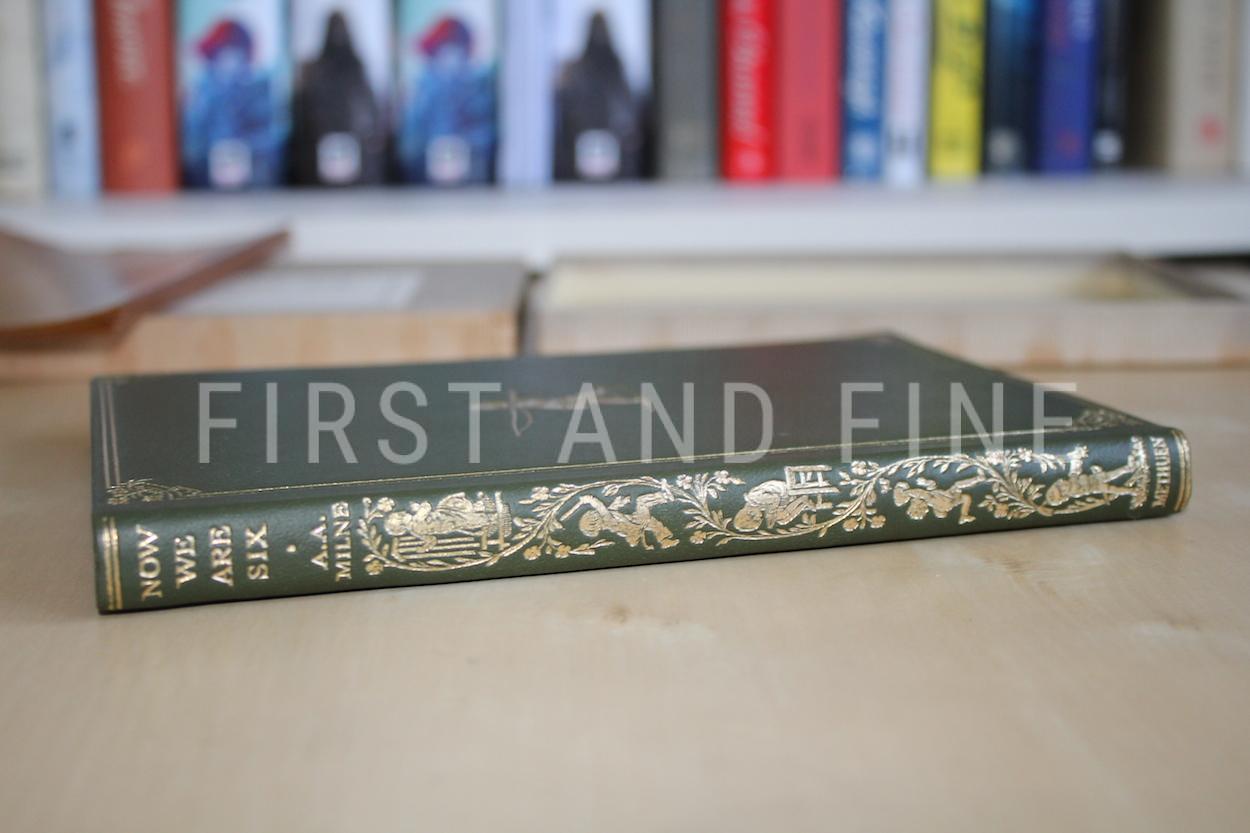
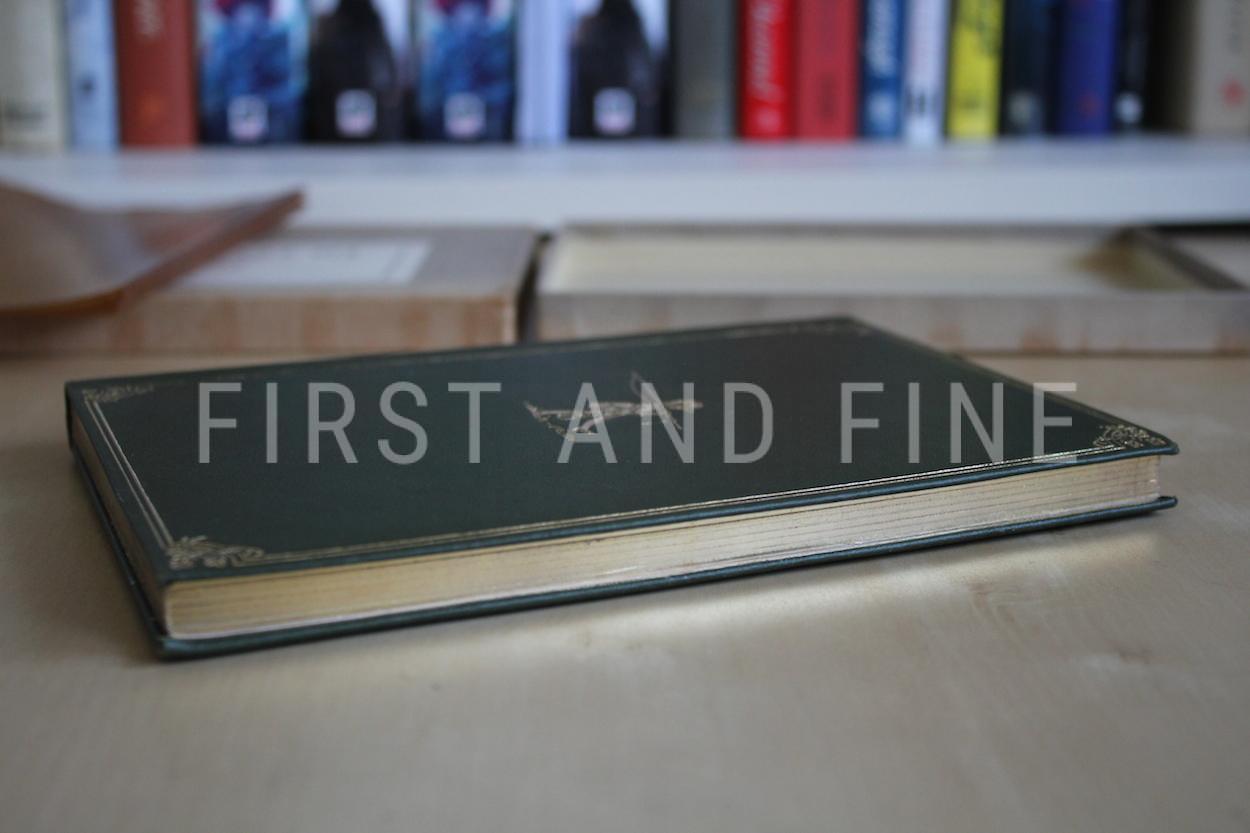
Alan Alexander Milne (1927) ‘Now We Are Six‘, UK first deluxe edition, first printing, published by Methuen in October 1927. In addition, a lengthy handwritten letter by A.A. Milne with very interesting content shown further below. Only 5,000 deluxe first edition copies of ‘Now We Are Six’ were produced divided into three colours: a red variant of 2,000 copies, a blue variant in 1,500 copies, and another 1,500 copies in the green variant such as this one presented.
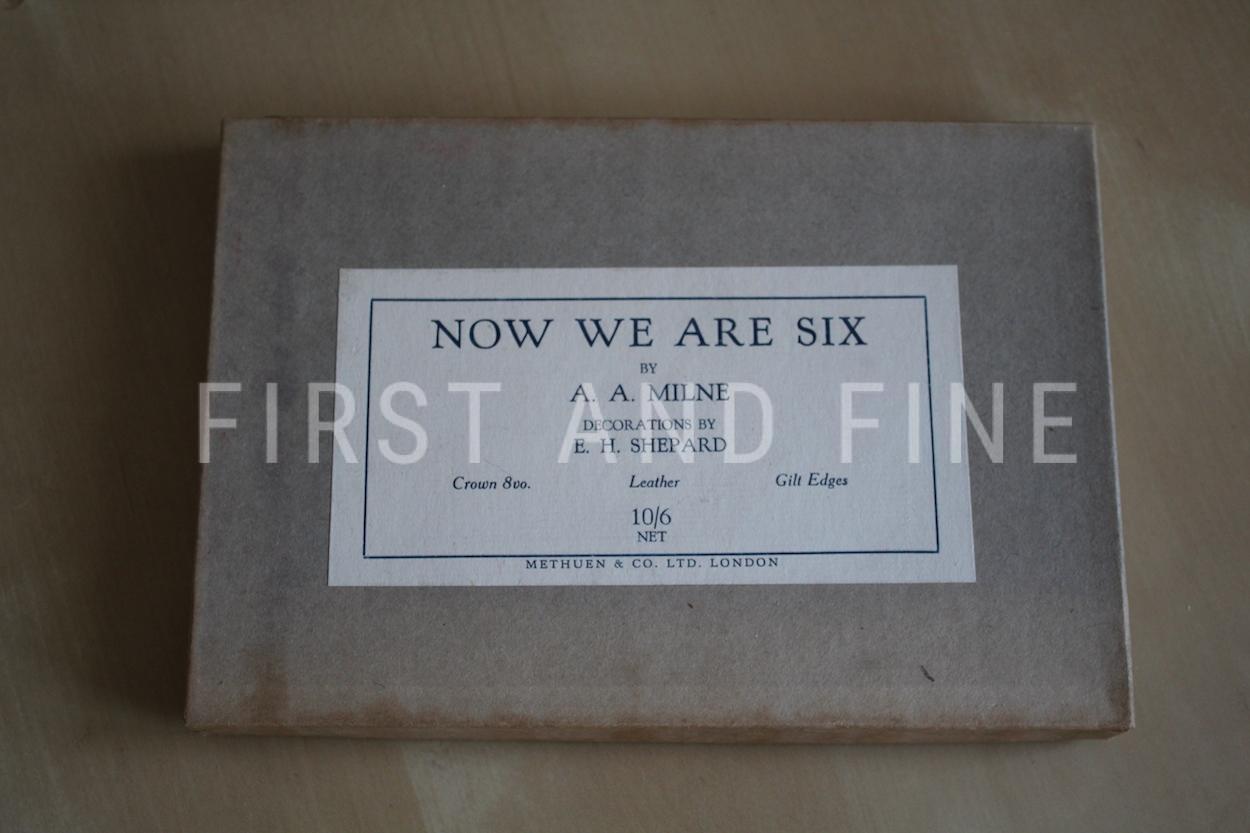
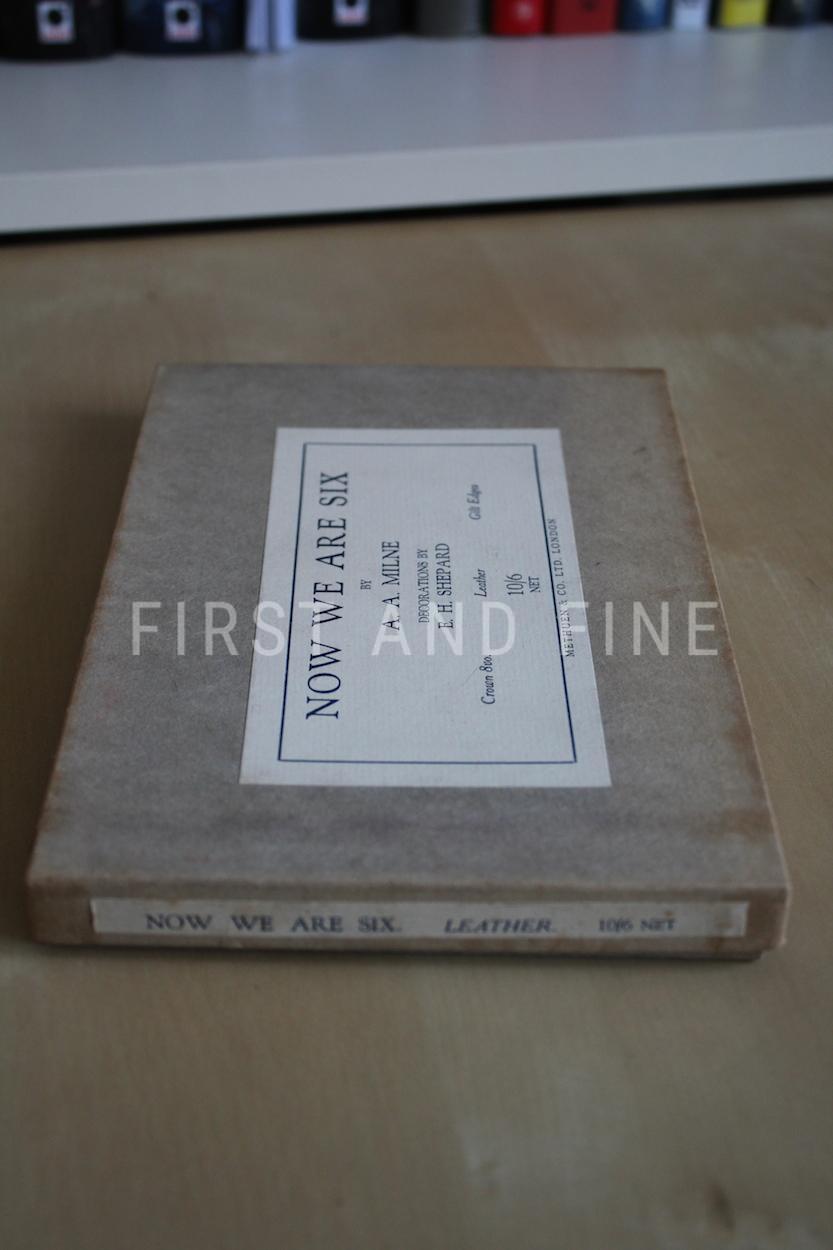
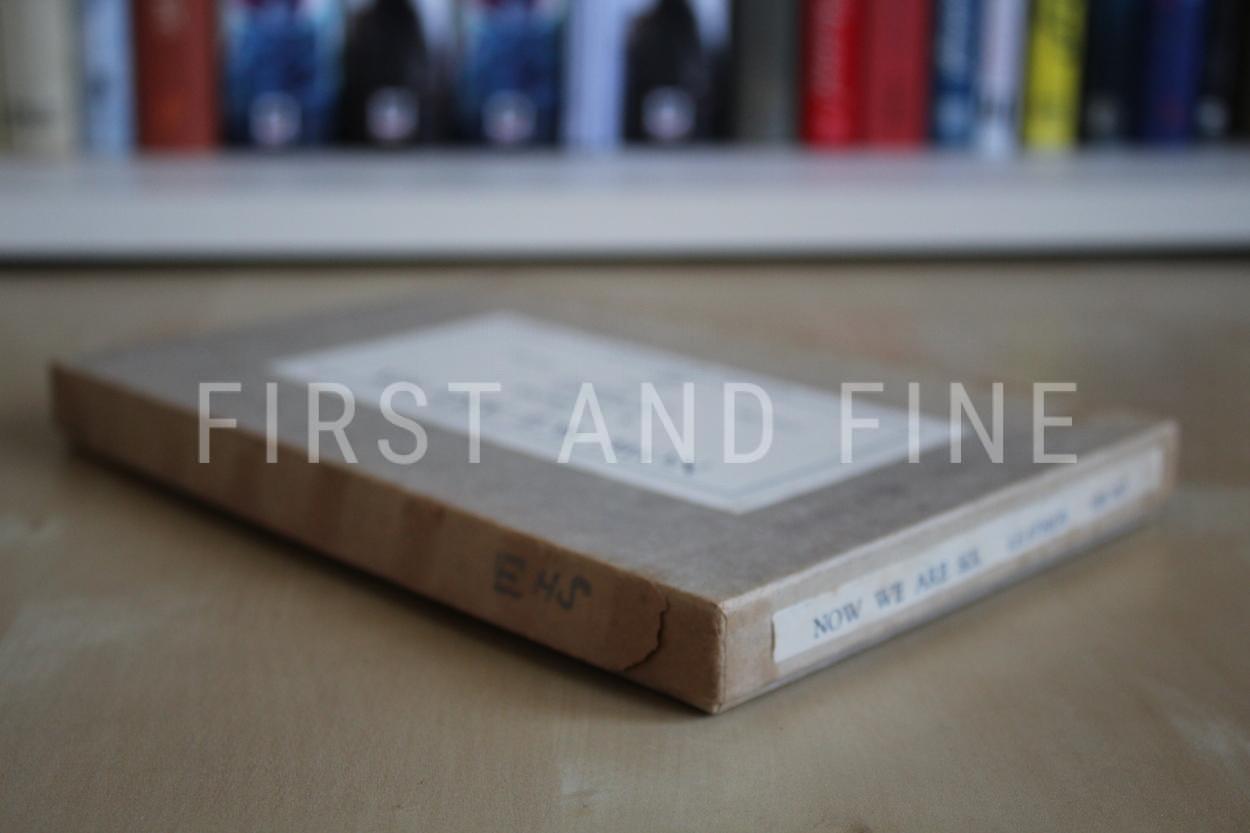
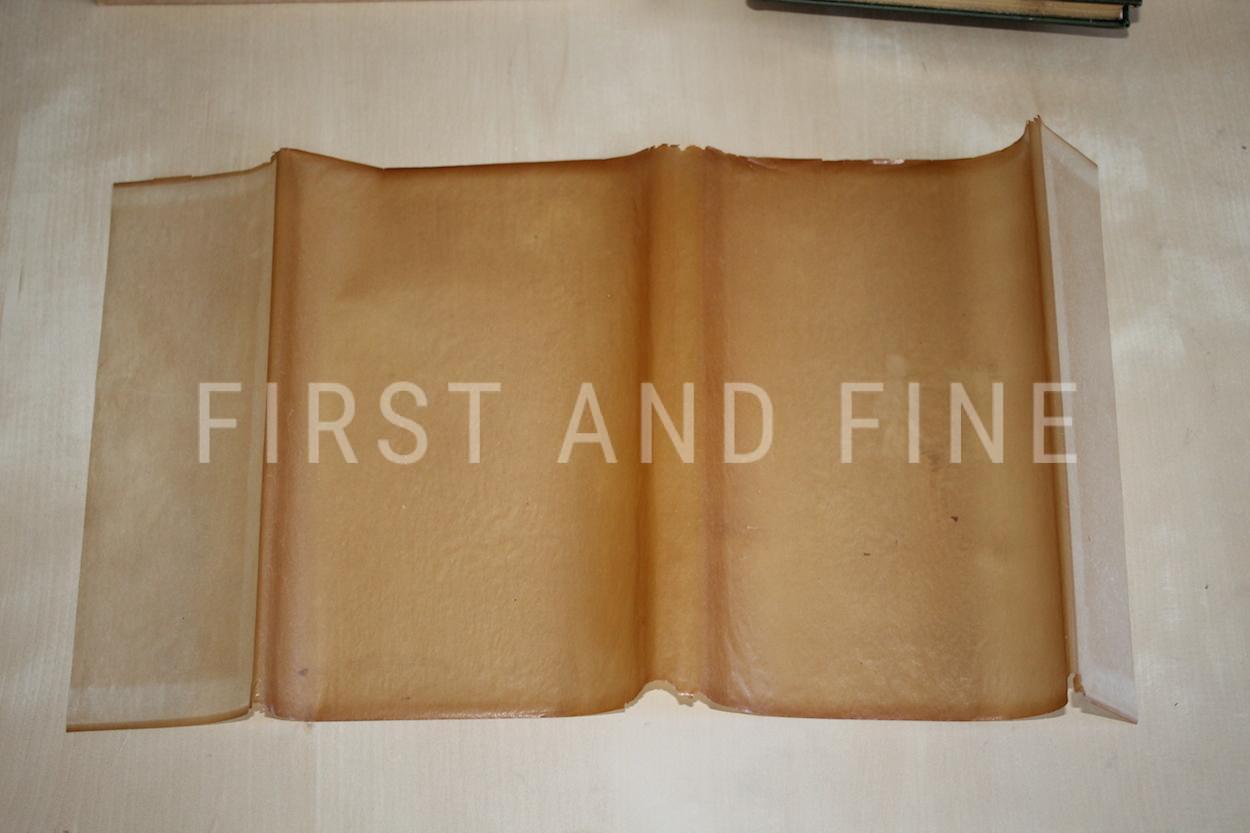
Condition: an absolutely fine copy with no issues whatsoever. The book has sat in its original box for decades and has not been red. The silk ribbon marker is present. All gilding is vibrant and not rubbed. No fading, no previous owner’s scribbles etc. Page block edges gilded as called for. The original glassine wrapper is still present, now of course darkened by the passage of time, but in good condition and in one piece. The original box is still present as well and in near fine condition, with slight natural ageing signs, and one split to the side. If more than a dozen copies survived in this condition we can call it a miracle given the passage of time.
The letter:
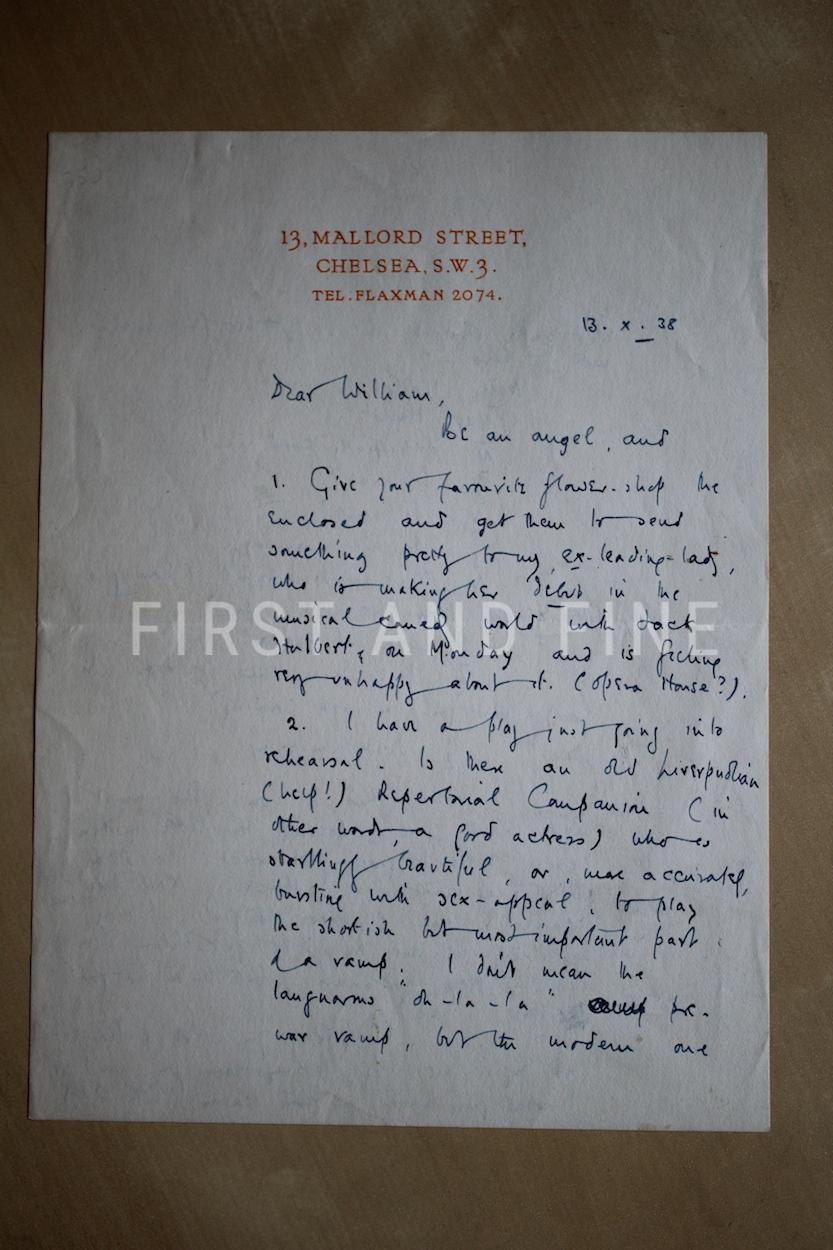
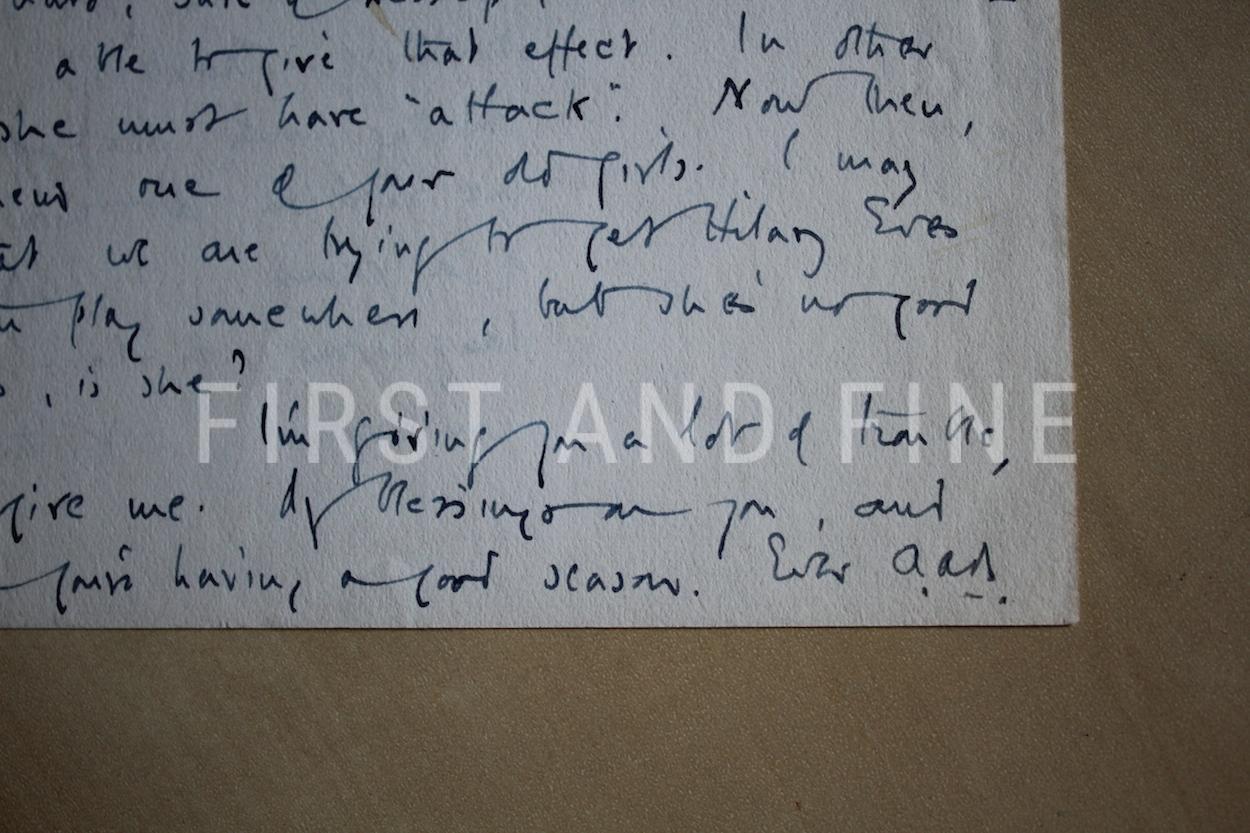
Single page autograph letter signed, 5.5″ x 7.5″, on letterhead of 13 Mallord Street, Chelsea, S.W.3. Dated “13. X .38” (13 October 1938). And signed by Alexander Milne as “A.A.M”. Penned to recto and verso including of writing of 12 lines of dialogue between “the vamp” and “the hero”. Fine condition.
A fantastic letter regarding A.A. Milne’s new play “Gentleman Unknown” . Milne is trying to launch his play which is going into rehearsal and is and is looking for the perfect Vamp to play one of the leading female roles. Transcribed in full below:
“Dear William,
Be an angel, and
- Give your favourite flower-shop the enclosed and get them to send something pretty to my ex-leading lady, who is making her debut in the musical comedy world with Jack Hulbert on Monday and is feeling very unhappy about it. (Opera House?)
2.I have a play just going into rehearsal. Is there an old Liverpudlian (help!) Repertorial Companion (in other words a good actress) who is startlingly beautiful, or, more accurately, bursting with sex-appeal, to play the shortish but most important part of a vamp. I don’t mean the languorous ‘oh-la-la’ pre-war vamp, but the modern one who sails straight in. At her first meeting with the hero—
Nella: Hallo!
Geoffrey: Hallo!
N: A perfectly good man!
G: So what?
N: So what?
G: Anything you say.
N: That sounds hopeful (Coming a little closer) Have we met before?
G: Does it matter?
N: I can’t say that it does. As I’m just going or just coming?
G: Just wondering
And so on. She must be quick, hard, sure of herself, a little insolent, that is, able to give that effect. In other words, she must have ‘attack.’ Now then, recommend one of your old girls. I may say that we are trying to get Hilary Eves into the play somewhere, but she’s not good for this, is she? I’m giving you a lot of trouble, but forgive me. Blessings on you, and I hope you’re having a good season.
Ever A.A.M.”
Now more than a decade after the success of his Winnie The Pooh children’s books, Milne felt indentured to that literary genre which was to become a source of considerable annoyance to him. His self-avowed aim was to write whatever he pleased and, until then, found a ready audience for each change of direction: he had freed pre-war Punch from its ponderous facetiousness; he had made a considerable reputation as a playwright (like his idol J. M. Barrie) on both sides of the Atlantic; he had produced a witty piece of detective writing in The Red House Mystery (although this was severely criticized by Raymond Chandler for the implausibility of its plot). But once Milne had, in his own words, “said goodbye to all that in 70,000 words” (the approximate length of his four principal Pooh Bear children’s books), he had no intention of producing any reworkings lacking in originality, given that one of the sources of inspiration, his son, was growing older.
His reception remained warmer in America than Britain, and he continued to publish novels and short stories, but by the late 1930s the audience for Milne’s grown-up writing had largely vanished: he observed bitterly in his autobiography that a critic had said that the hero of his latest play (“God help it”) was simply “Christopher Robin grown up… !”.
A landmark book of children fiction with a fantastic letter!
| Weight | 1 kg |
|---|
Sold
Out of stock
Related products
-
Rowling, J.K. (2007) ‘Harry Potter and the Deathly Hallows’, UK signed and inscribed first edition with ephemera
£2,750.00 -
Rowling, J.K. (2000) ‘Harry Potter and the Goblet of Fire’, UK signed and inscribed first edition
£2,000.00 -
Rowling, J.K. (2007) ‘Harry Potter and the Deathly Hallows’, US signed first edition
£4,000.00 -
Portis, Charles (1968) ‘True Grit’, US signed and inscribed first edition
£3,000.00