
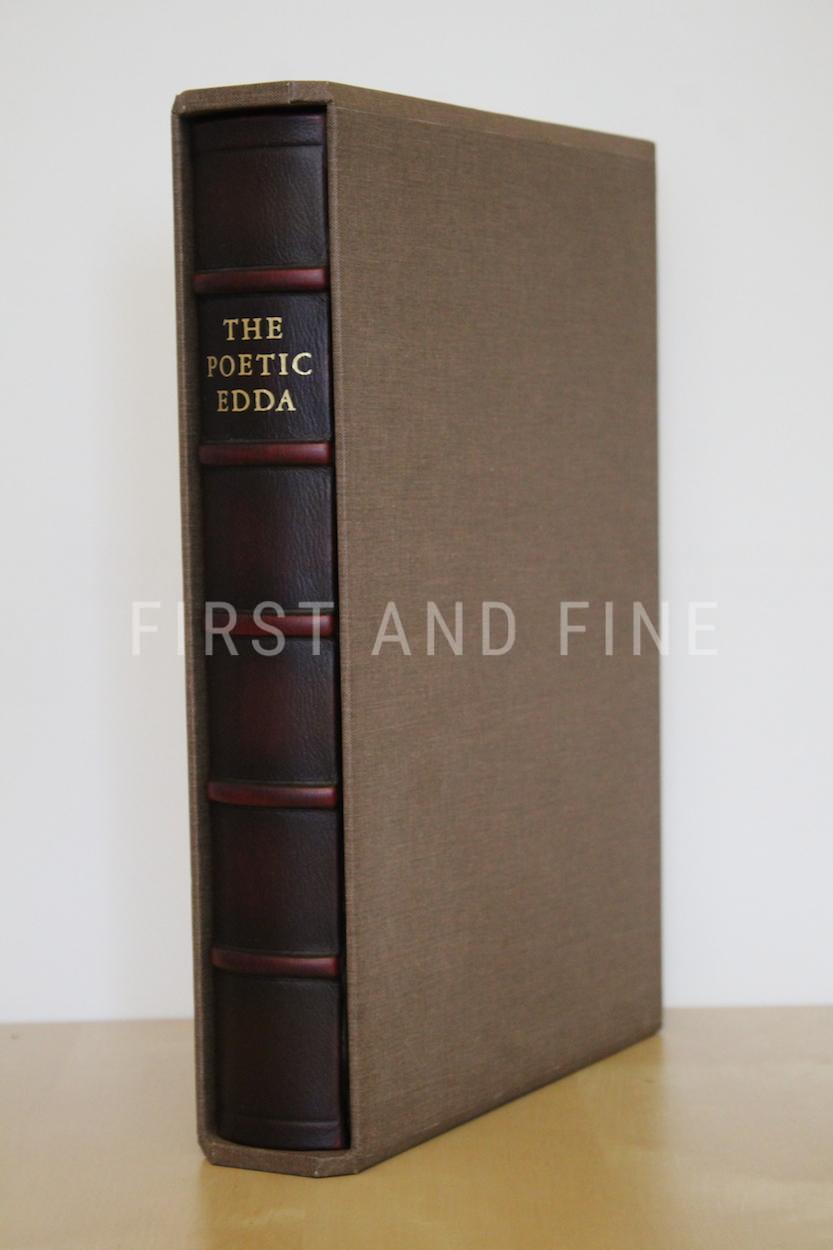
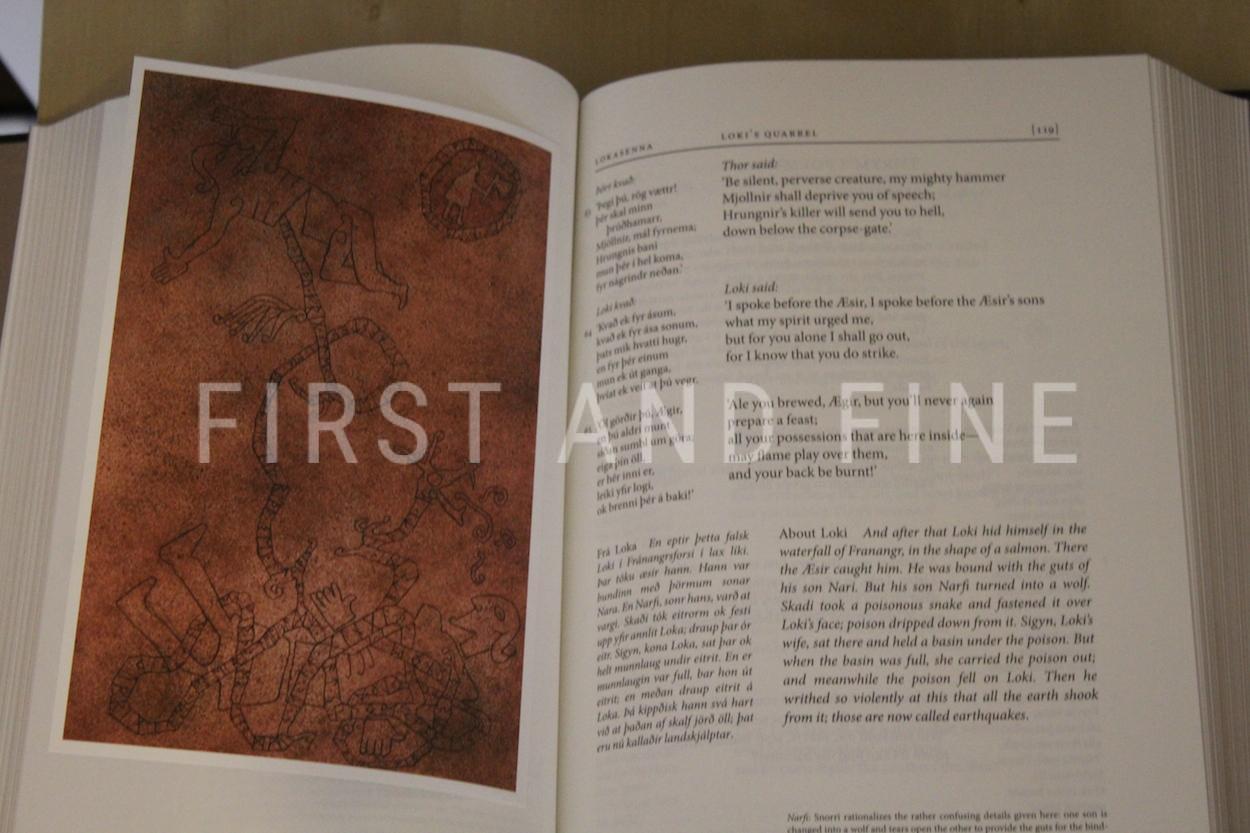
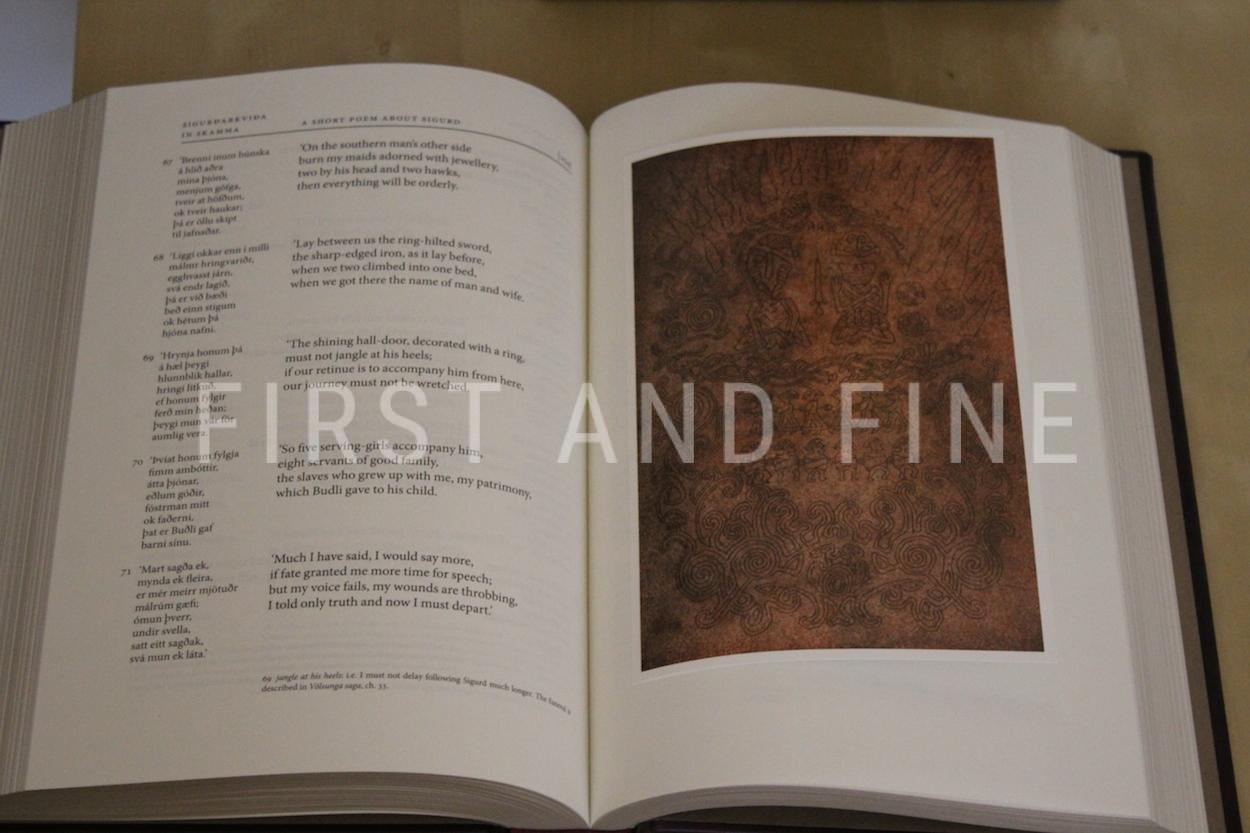
‘The Poetic Edda’, Folio Society limited edition
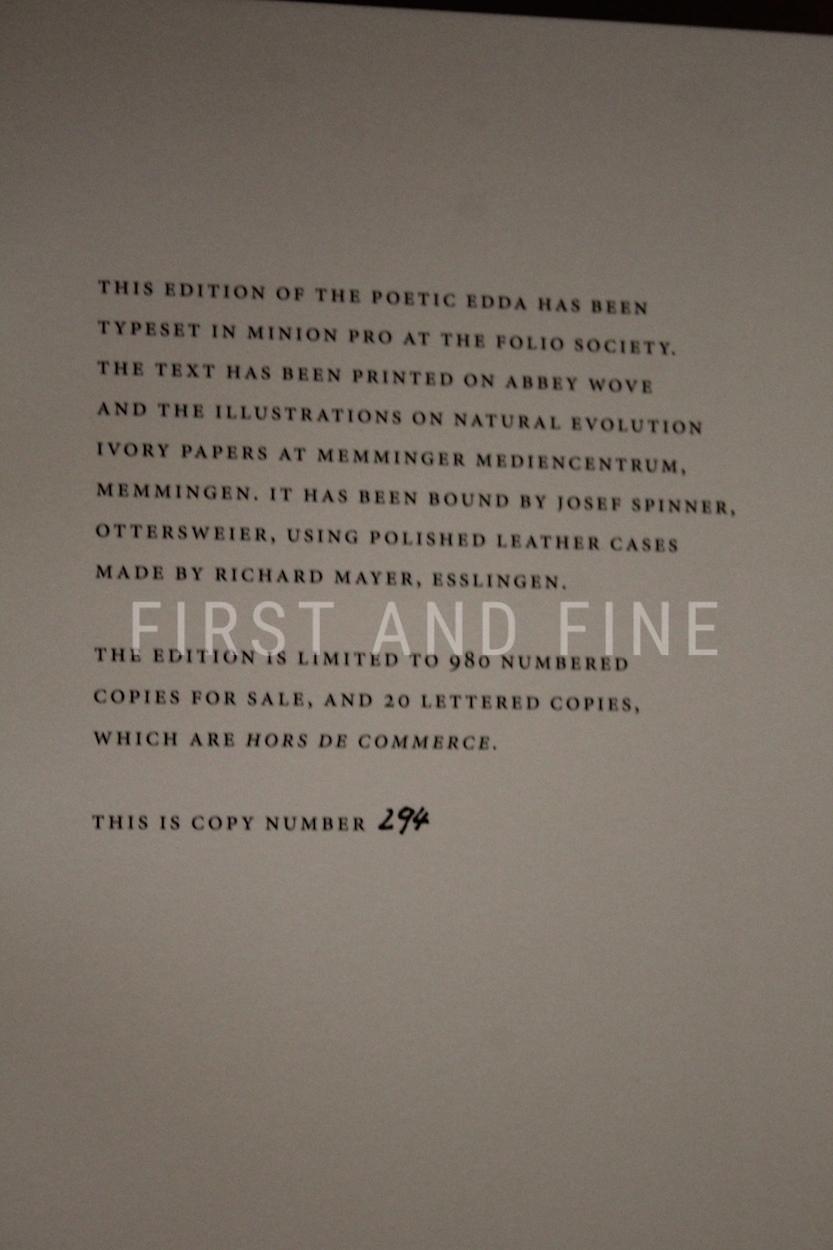
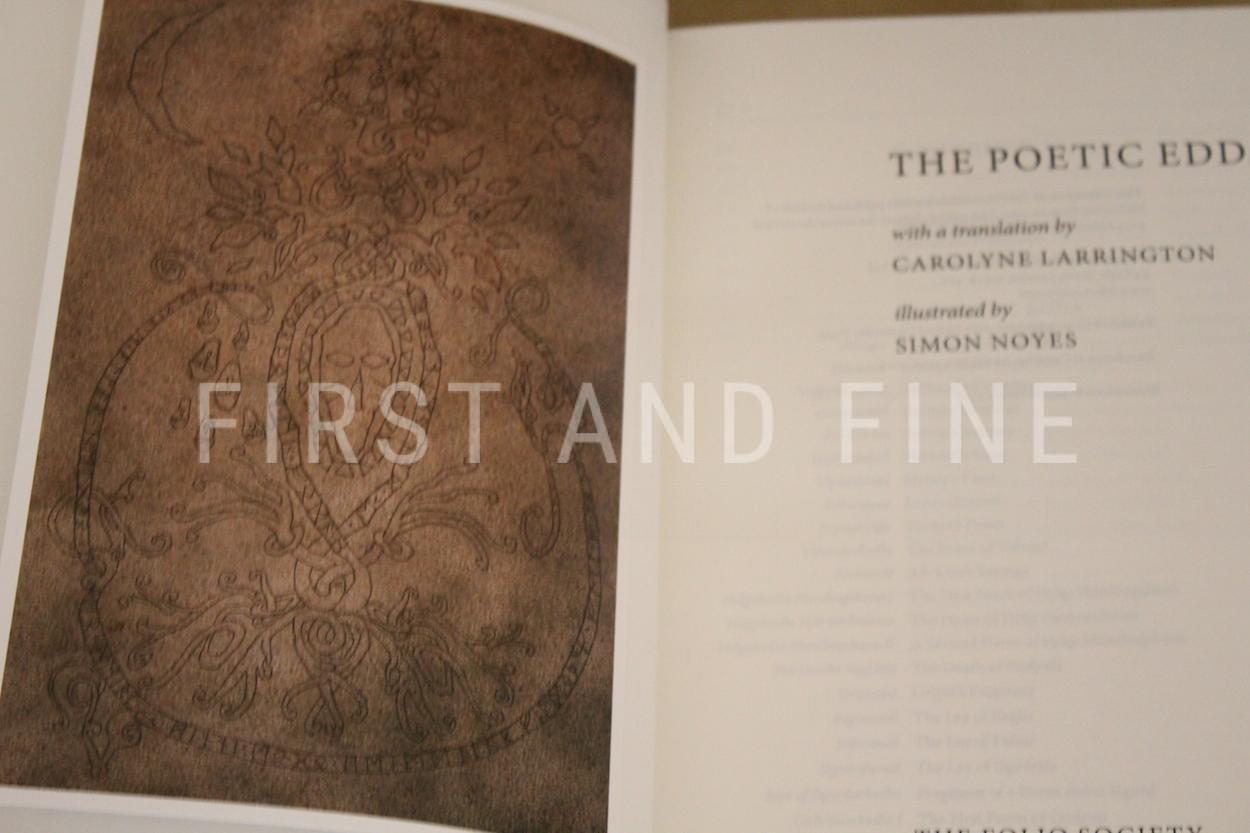
‘The Poetic Edda‘, Folio Society limited edition. One of only 980 numbered copies of which this is no. 294.
Condition: fine with no issues.
Production details according to the publisher:
– Limited to 980 hand-numbered copies
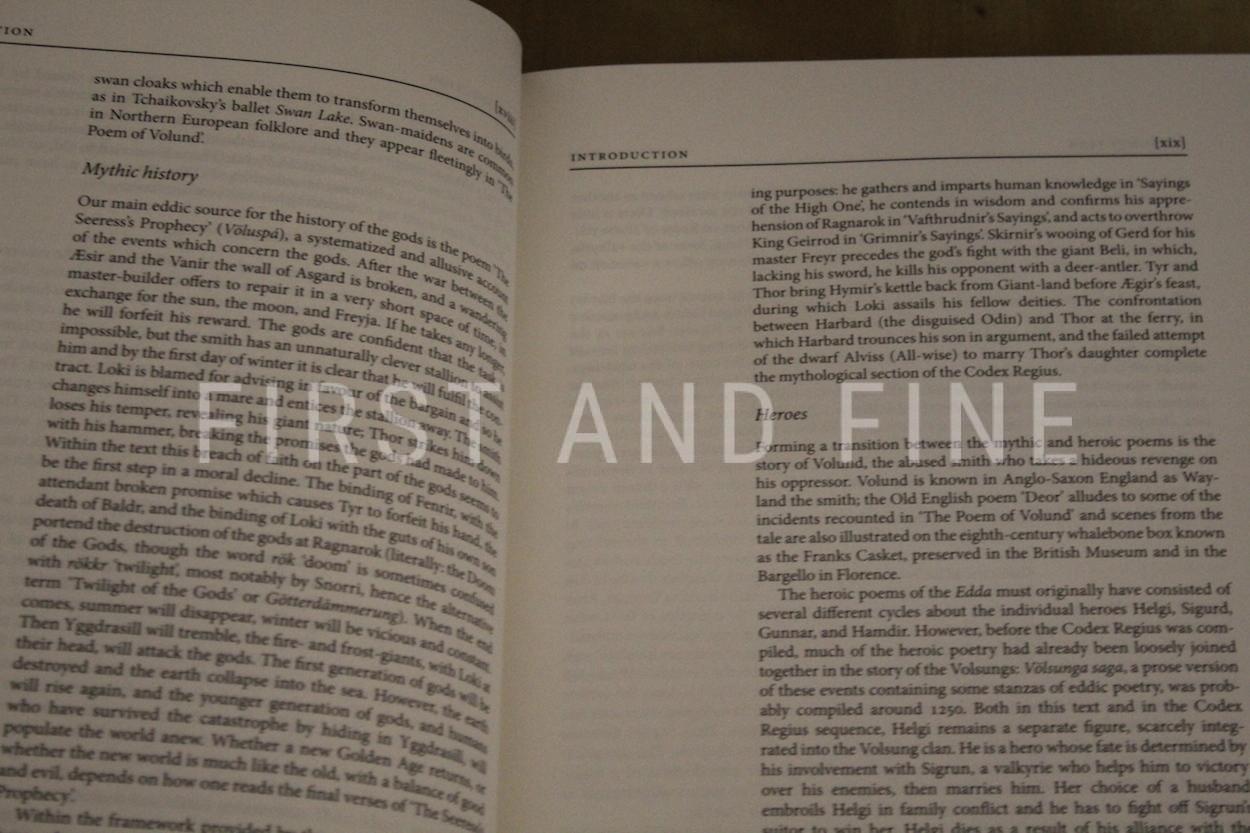
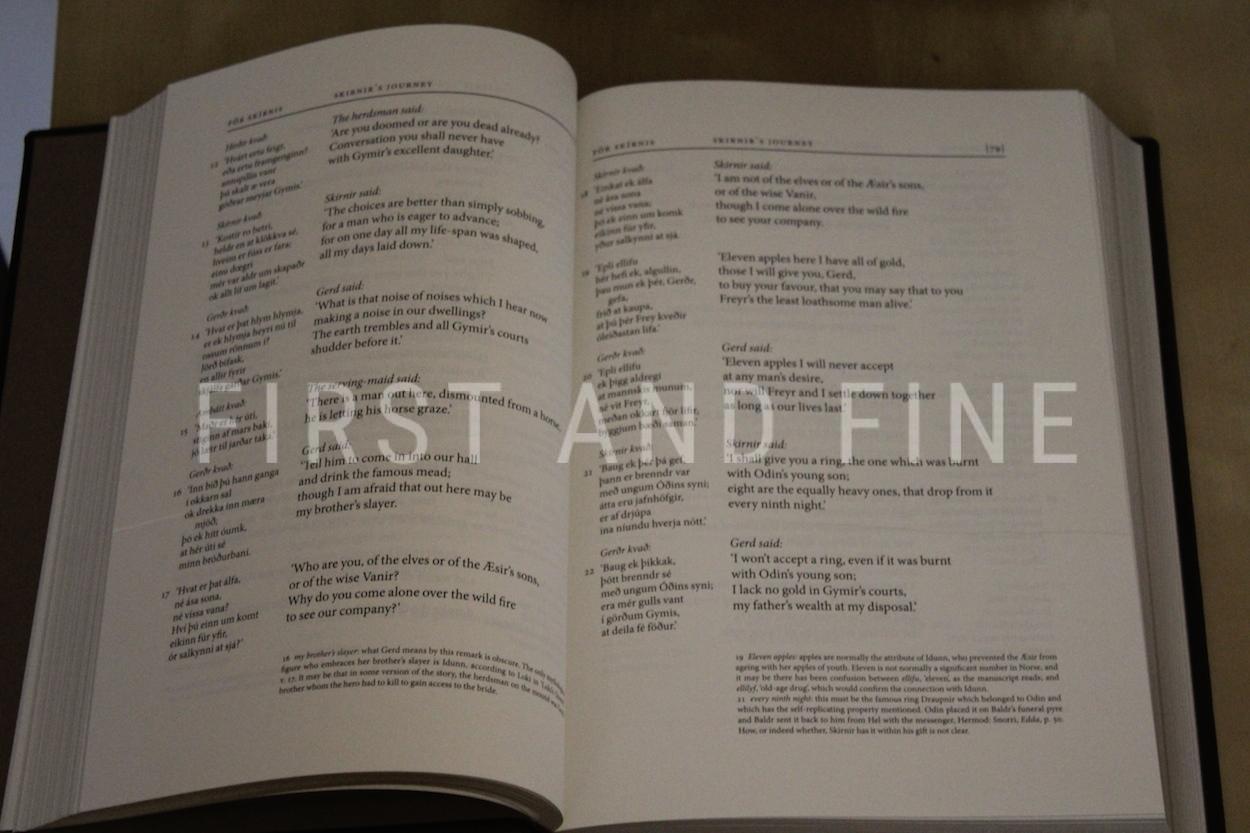
– 496 text pages typeset in Minion
– Printed on Abbey Wove paper
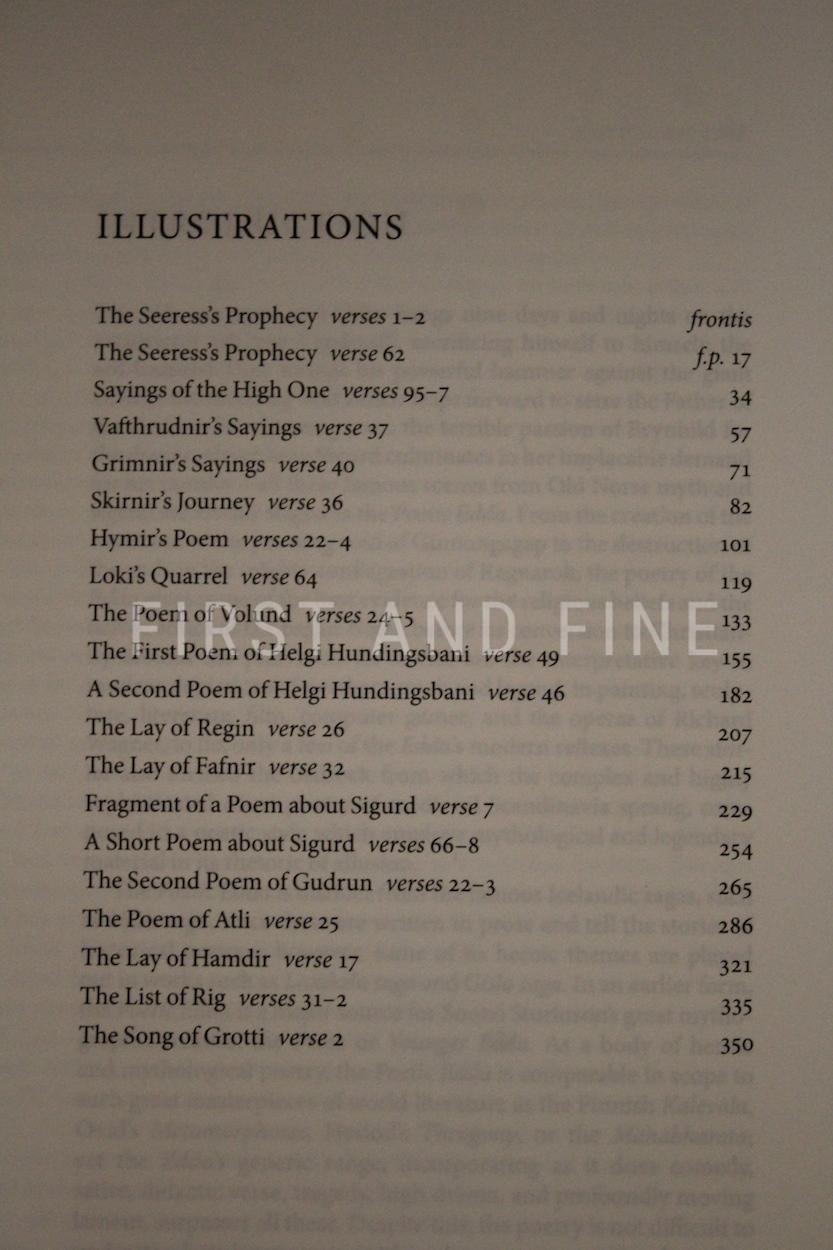
– 20 colour illustrations printed on Natural Evolution Ivory and tipped on to text pages
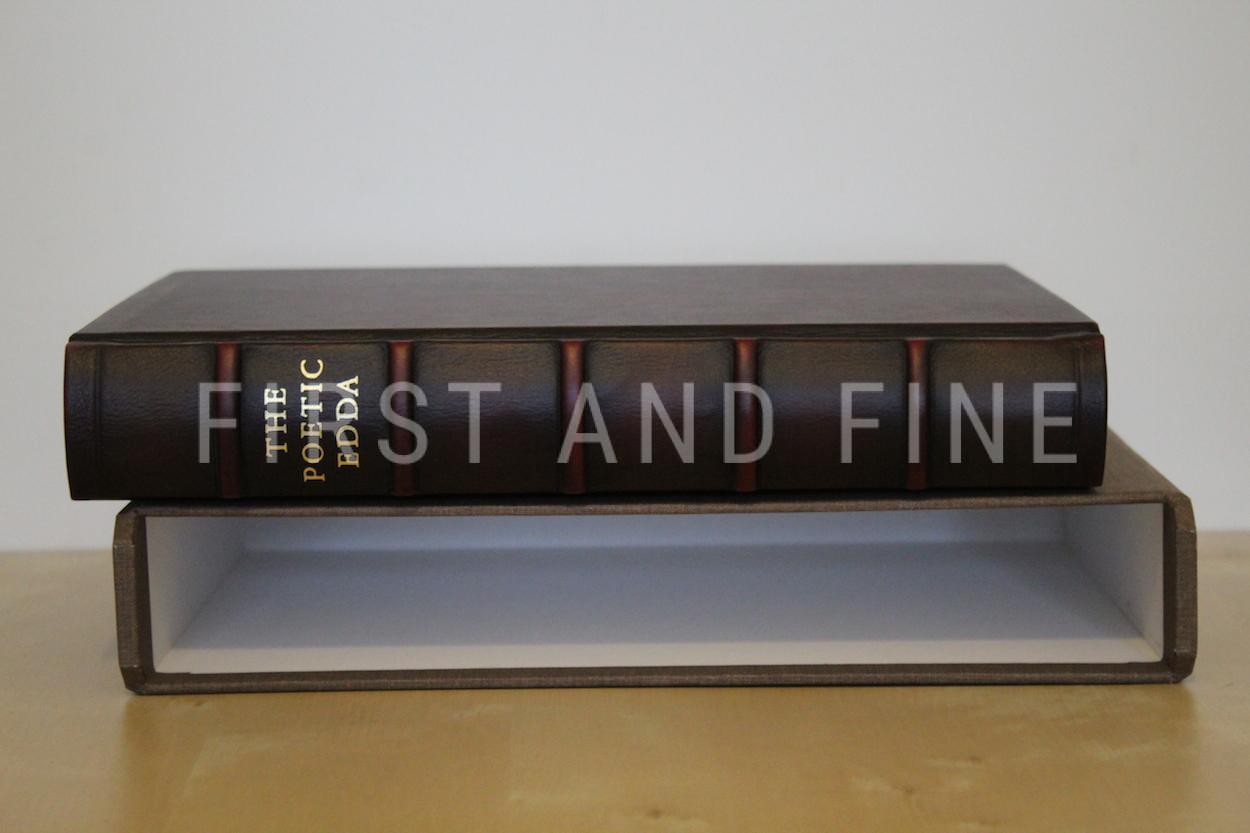
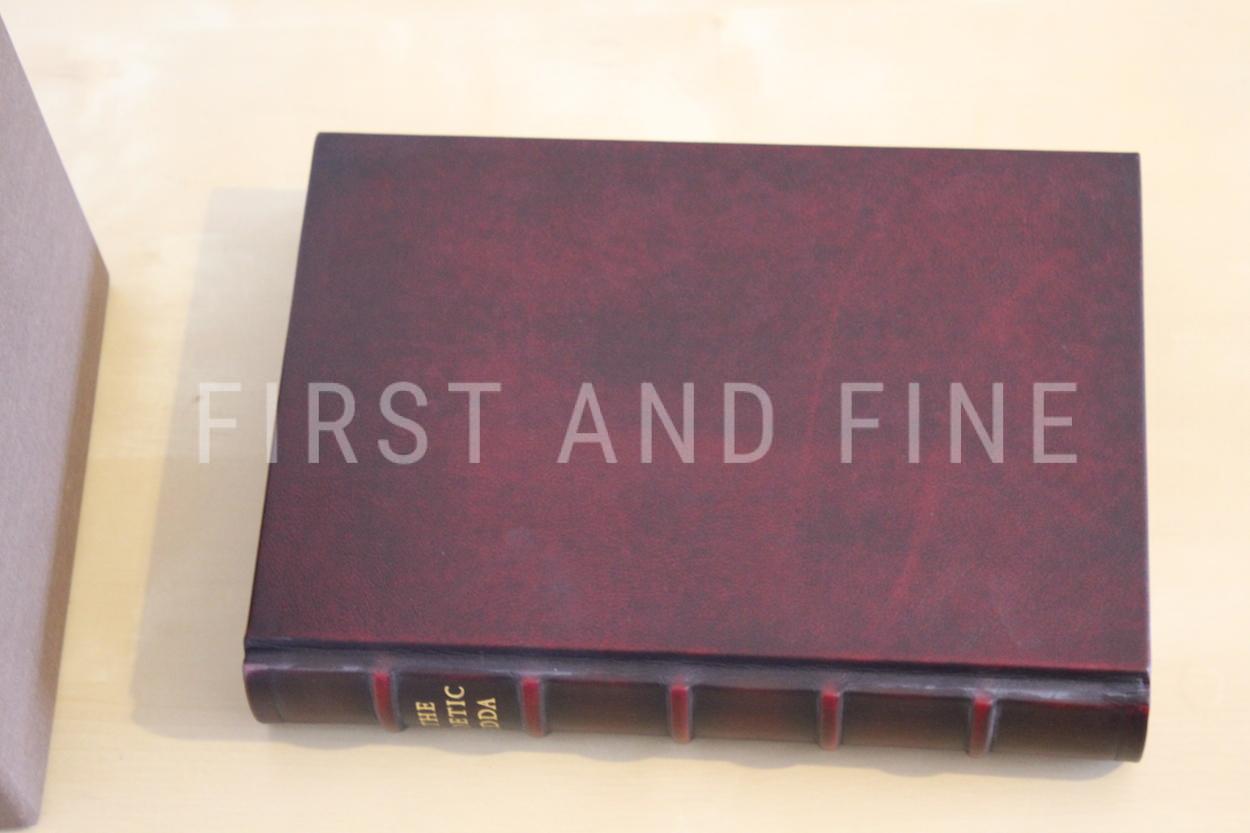
– Bound in hand-polished leather with five raised bands
– Pages coloured on three edges
– Spine blocked in gold foil
– Slipcase bound in canvas
– 11 ¾˝ × 8 ½˝
“The poems of the Old Norse collection known as the Poetic Edda respond to one of humankind’s greatest urges – the search for origins. Subtle, complex and suggestive, yet disarmingly direct in style, these tales of gods, heroes and monsters, of love, war, folly and deceit, inhabit a world more primal in character than any other corpus of European mythology. We do not know who composed them, or when, but ever since their rediscovery in the 17th and 18th centuries they have inspired intellectuals and artists in all media, for whom these poems held the tantalising key to a shared Northern identity.
All but a few of the poems in the Poetic Edda were preserved in a single manuscript known as the Codex Regius, copied by an unknown Icelandic scribe in the 1270s and presented by the Lutheran Bishop of Skálholt, Brynjolf Sveinsson, to the Danish court nearly four centuries later. Bishop Brynjolf was convinced that this unassuming manuscript contained the hitherto lost source material for the great treatise on Norse poetry by the Icelandic historian Snorri Sturluson (1179– 1241), which its author had referred to as an edda or poetics. The Codex Regius was duly dubbed the Poetic Edda or Elder Edda, to distinguish it from Snorri’s ‘younger’ prose work.
Translations into Latin, French and English were enthusiastically received by a public eager to construct a sense of its own legendary past. Early adaptations of the Edda poems such as Thomas Gray’s The Descent of Odin heralded a mania for the Norse myths in the 19th century, reaching its apogee in works by William Morris and in Richard Wagner’s Ring cycle, of which the mythological substrata are formed from Eddic tales. The fascination with the collection continued into the following century, with Ezra Pound, W. H. Auden and Jorge Luis Borges all professed admirers. Most pervasively of all, J. R. R. Tolkien found inspiration in the Edda for his creation of Middle Earth.”
| Weight | 4.9 kg |
|---|
Sold
Out of stock
Related products
-
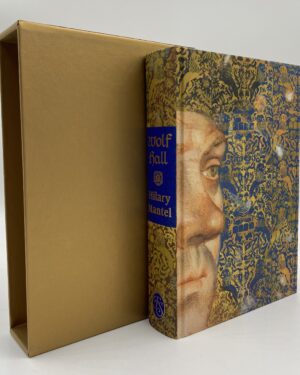
Mantel, Hilary (2022) ‘Wolf Hall’, UK signed illustrated edition by The Folio Society
£500.00 -
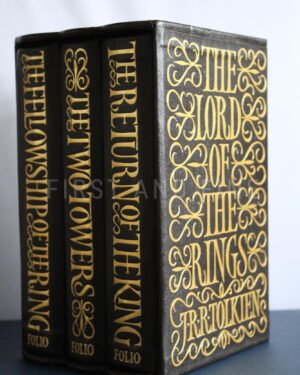
Tolkien, J.R.R. (2002) “The Lord of the Rings’, UK limited edition, published by the Folio Society
£2,500.00 -
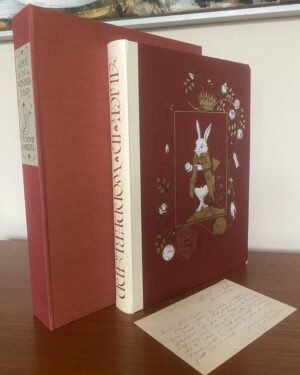
Carroll, Lewis (2016) ‘Alice in Wonderland’, Folio Society illustrated limited edition with original signed Carroll letter
£5,000.00 -
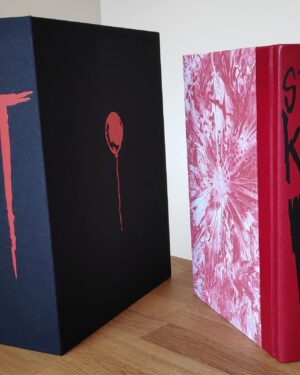
King, Stephen (2025) ‘IT’, Folio Society limited edition, signed by director Guillermo del Toro
£1,000.00