




Wells, H.G. (2020) ‘The Time Machine’, Suntup deluxe signed Roman Numeral limited edition with an original H.G. Wells letter
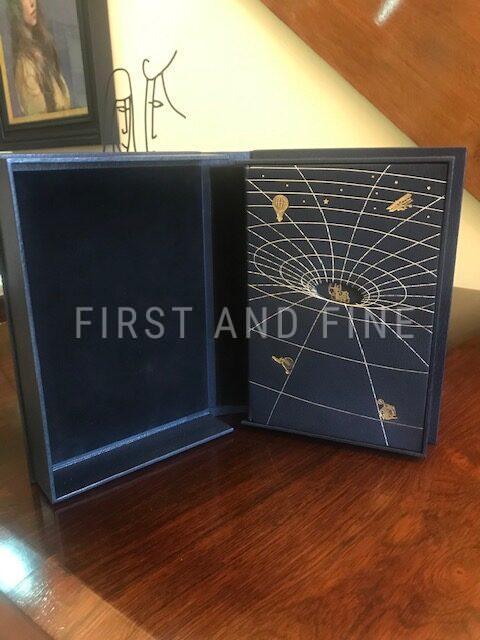
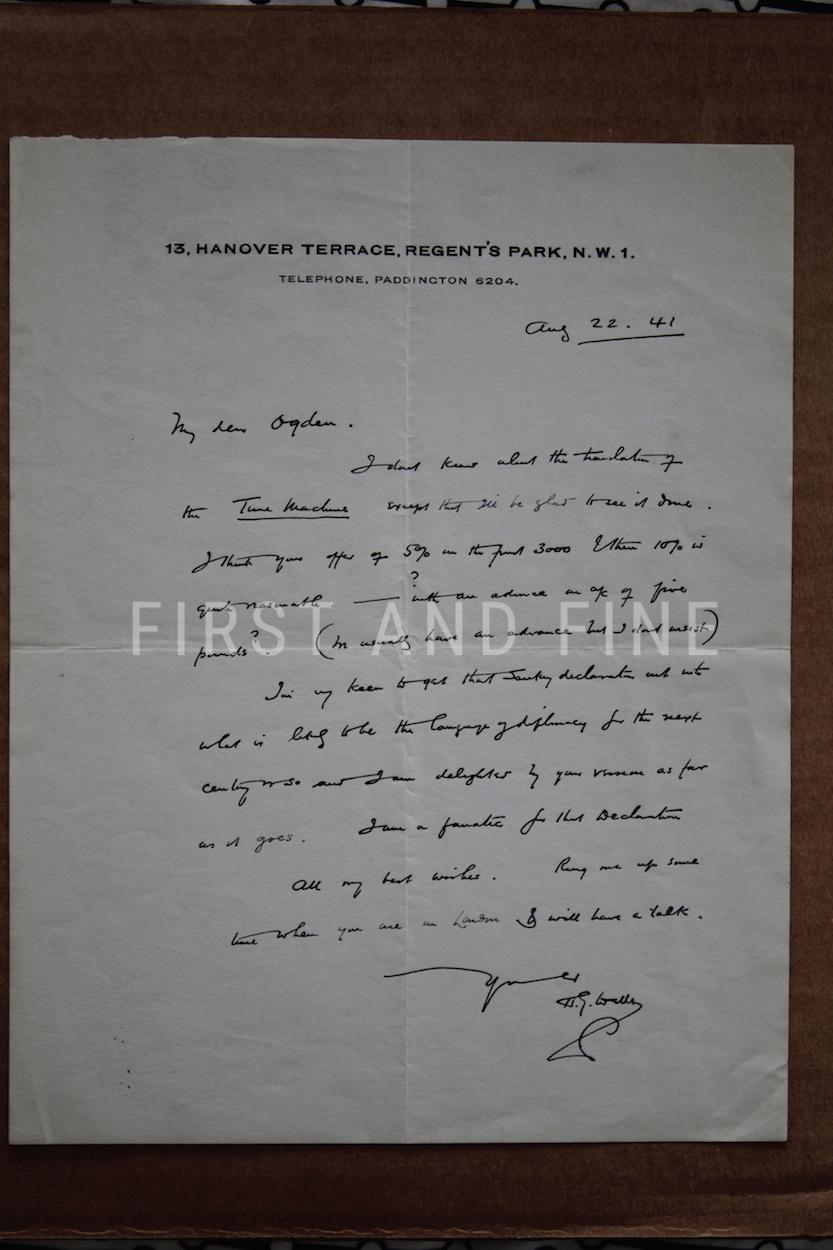
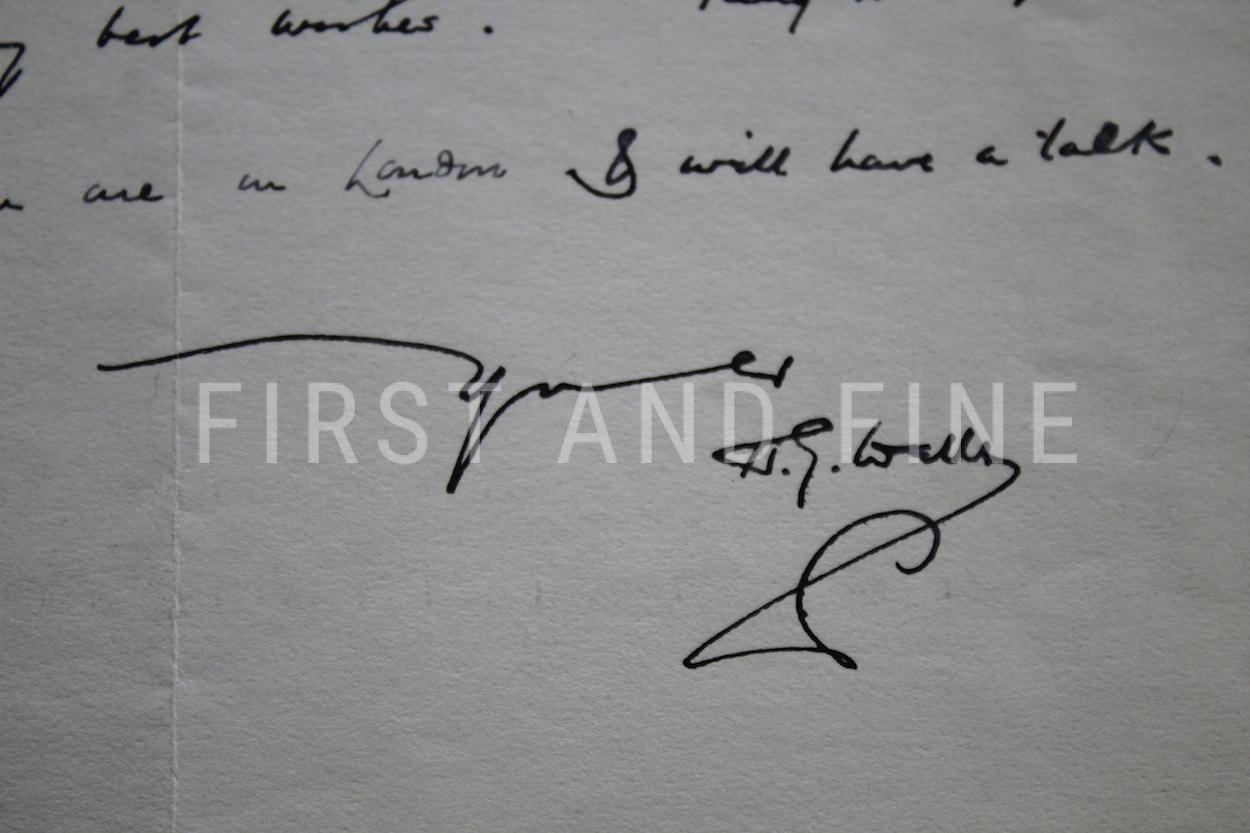
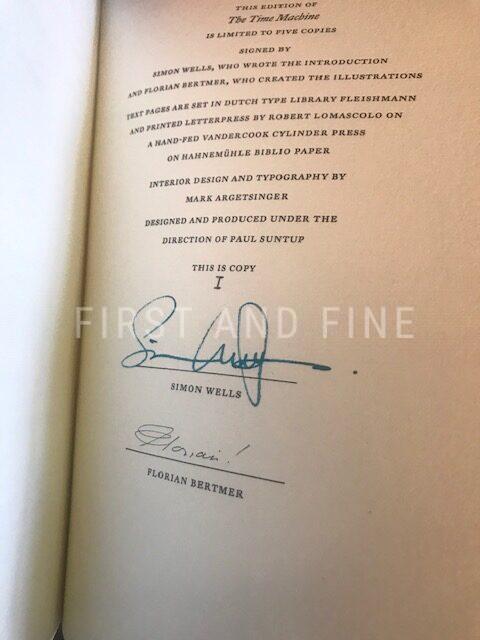
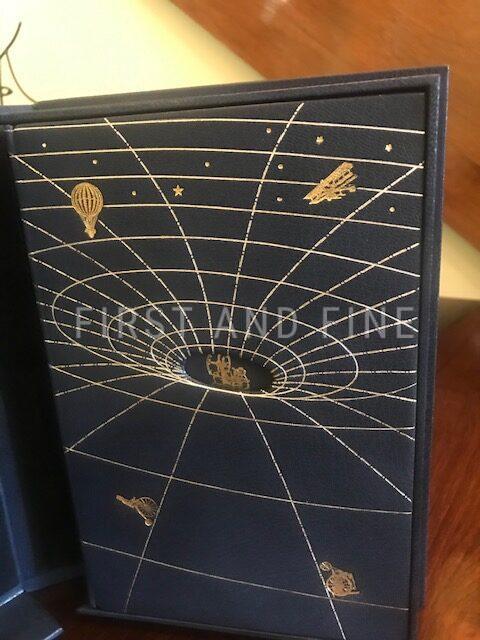
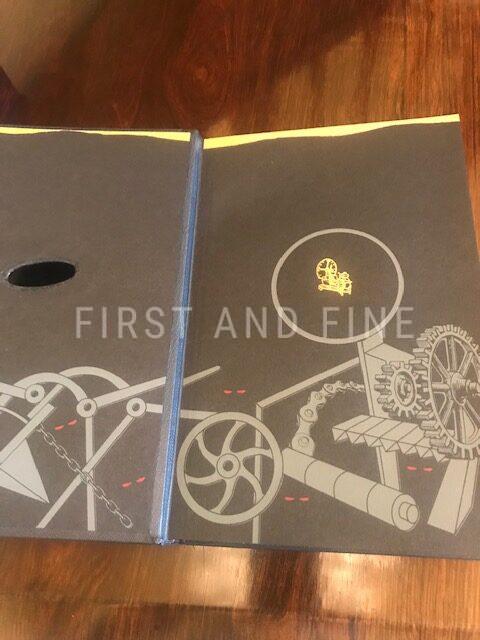
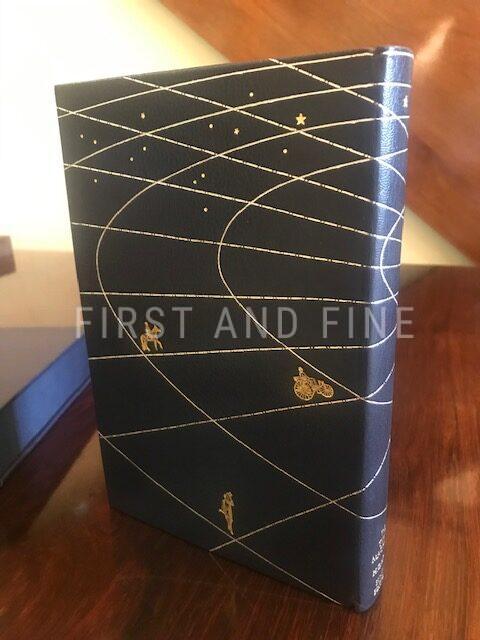
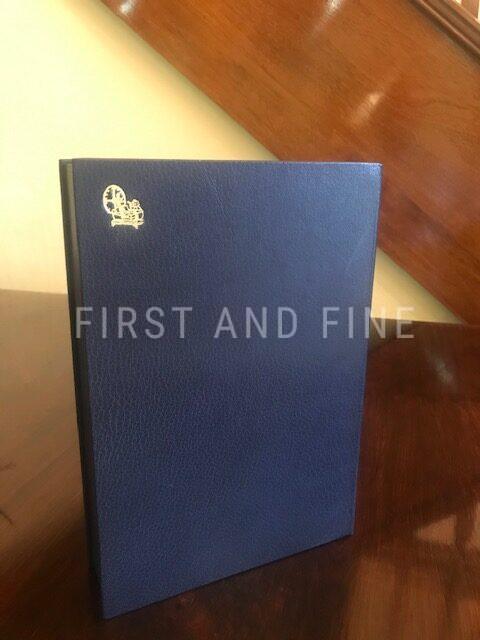
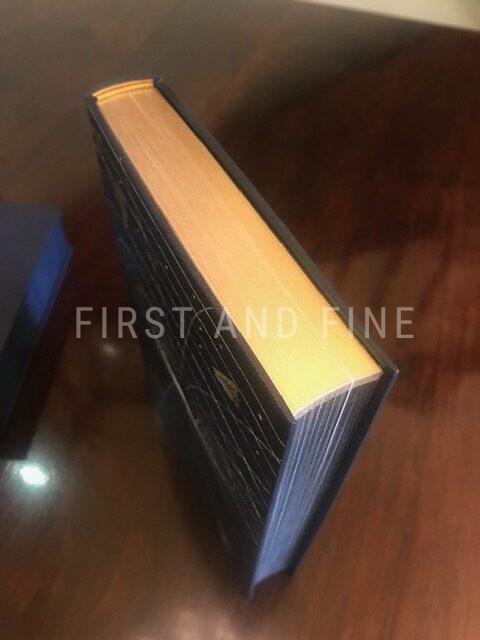
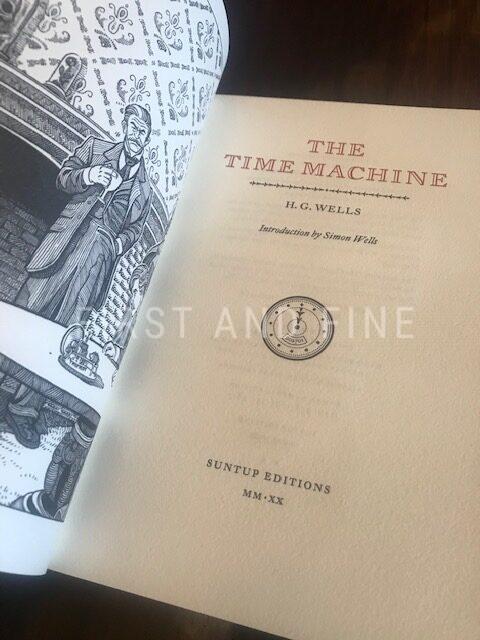
Herbert George Wells (2020) ‘The Time Machine‘, US deluxe limited edition, published by Suntup Press. This is one of only five Roman Numeral editions, signed by Simon Wells, the author’s great grandson and director of the ‘Time Machine’ (2002) film adaptation , and signed by the artist Florian Bertmer. The book is a work of art as specified below. We include an original handwritten and signed H.G. Wells letter, fittingly with ‘Time Machine’ content (see below for details).
1) The letter and its content:
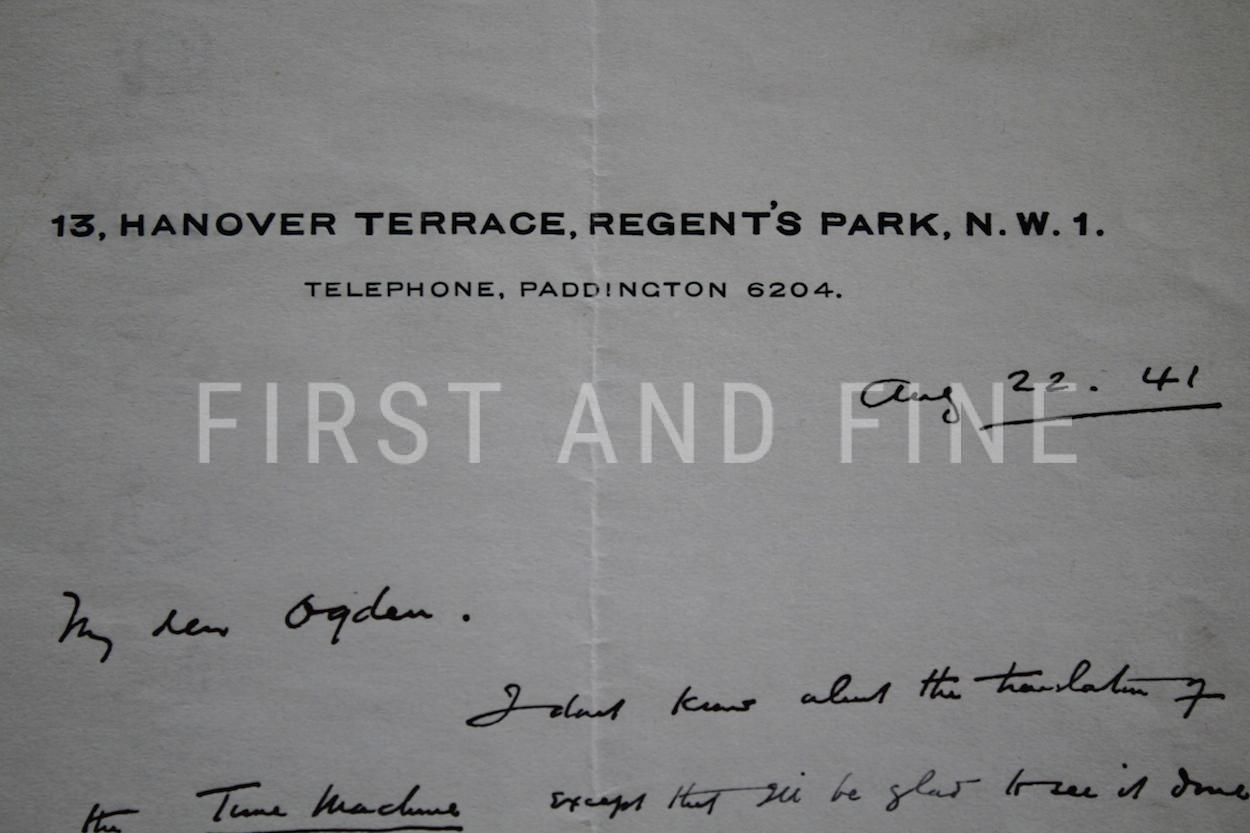
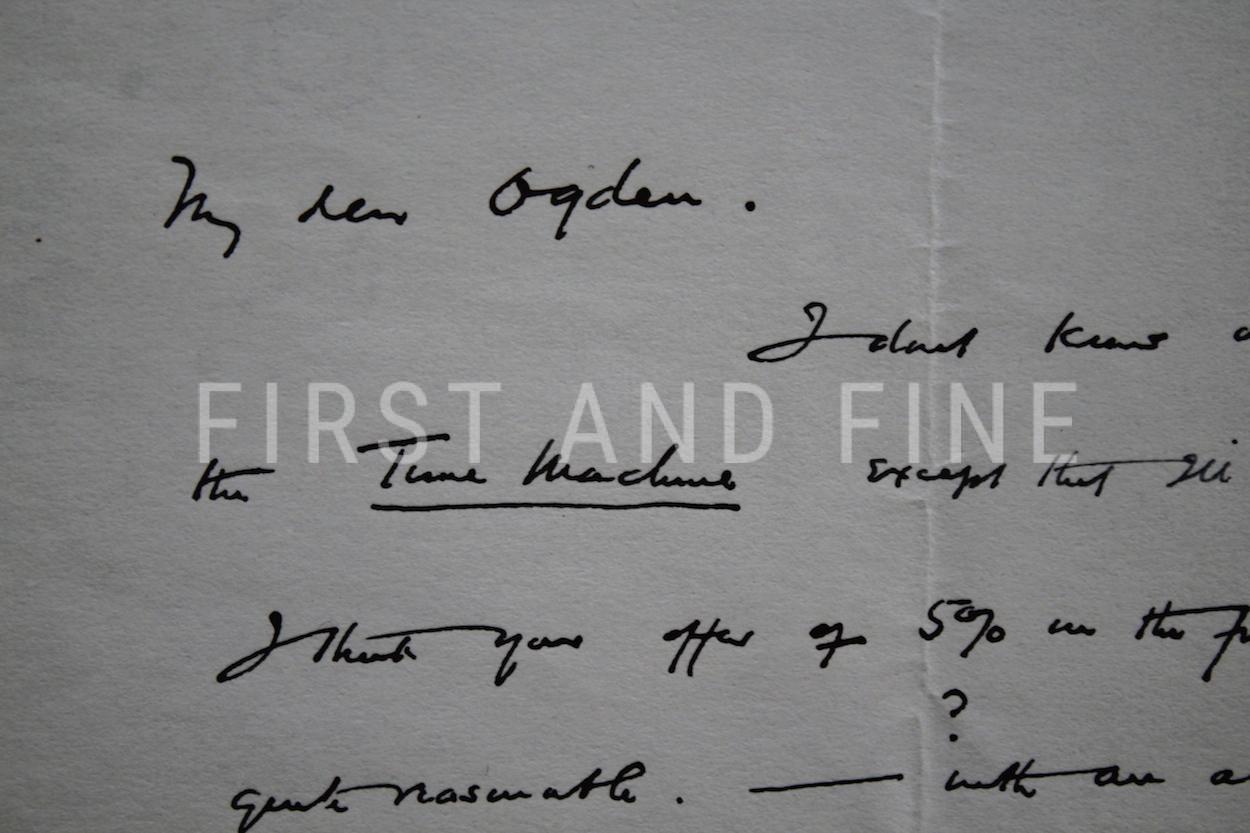
Handwritten Letter Signed, “H. G. Wells”, 7 inch x 9 inch, one page, on his “13, Hanover Terrace, Regent’s Park, N.W. 1” letterhead. Handwritten letter is to British writer and linguist Charles Kay Ogden, in part: “I don’t know about the translation of The Time Machine, except that I’ll be glad to see it done. I think your offer of 5% on the first 3000 & then 10% is quite reasonable –? with an advance on a/c of five pounds? (We usually have an advance but I don’t insist). I’m very keen to get that Sanky declaration out into what is likely to be the language of diplomacy for the next century or so and I am delighted by your reason as far as it goes. I am a fanatic for this declaration. All my best wishes. Ring me up some time when you are in London & we’ll have a talk.” In near fine condition, with usual letter folds.
Charles Kay Ogden (1889 – 1957) was an English philosopher, writer, and linguistic psychologist, who is now mostly remembered as the inventor and propagator of Basic English, an international auxiliary language and aid for teaching English as a second language. Essentially a simplified subset of regular English, the concept was first presented in Ogden’s 1930 book Basic English: A General Introduction with Rules and Grammar. Wells adopted the idea of Basic English in his 1933 science fiction work The Shape of Things to Come.
John Sankey, 1st Viscount Sankey, GBE, PC, KC (1866-1948) was a British lawyer, judge, Labour politician and Lord High Chancellor of Great Britain, famous for many of his judgments in the House of Lords. He gave his name to the Sankey Declaration of the Rights of Man (1940), the product of the Sankey Committee, which was set up in 1940 by the Daily Herald and the National Peace Council, and which Sankey chaired. The most active member of the committee was H. G. Wells, who prepared the draft that the Declaration was based on. It identified eleven fundamental human rights: right to life, protection of minors, duty to the community, right to knowledge, freedom of thought and worship, right to work, right to personal property, freedom of movement, personal liberty, freedom from violence, and right of law making. The Sankey Declaration was widely publicized by its sponsors at the time, but has since been largely forgotten, having been overtaken by the Universal Declaration of Human Rights adopted by the United Nations General Assembly in 1948.
2) Production details of the Suntup limited edition book according to the publisher:
- 6” x 9” trim size.
- Hand bound by Shepherds Sangorski & Sutcliffe in London, U.K.
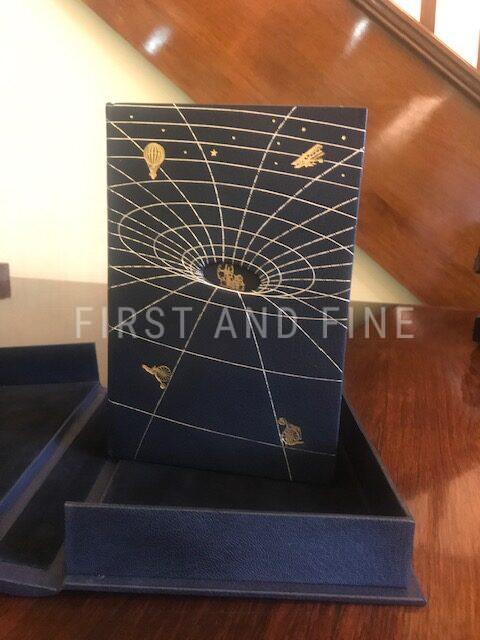
- Bound in midnight blue goatskin with a ‘vortex’ on the front board which reaches around to the back.
- Moulded leather and sculpted boards.
- White gold leaf hand tooling.
- Custom made handtools.
- Handsewn silk endbands.
- Hand-colored edges.
- Formed headcaps.
- Introduction by Simon Wells, great-grandson of H.G. Wells, and director of the 2002 film adaptation.
- Six ink illustrations by Florian Bertmer printed letterpress along with the text.
- Signed by Simon Wells and Florian Bertmer.
- Printed letterpress on Hahnemühle Biblio mold-made paper.
- Two color printing on title page.
- Housed in a drop back box in matching leather with hand tooling in white gold.
- Limited to no more than 5 copies for sale.
Condition of the Suntup limited edition book: fine with the original packaging.
“Considered the greatest science-fiction novel of all time, The Time Machine is a seminal moment in the history of English literature. A dazzling display of new thought that has been endlessly copied since its release in 1895, its title alone – a phrase coined by Wells as a device for traveling backwards or forwards through time – has become part of the cultural lexicon. When an English Scientist, known only as The Time Traveller, invents a machine that can travel through time, he finds himself in a distant future inhabited by a mellow race of humans called the Eloi. The Time Traveller will soon discover, however, that they are not the only race left on Earth. The Time Machine remains one of the most important novels of the 19th century.
The Time Machine will mark the first in a three-book set of H.G. Wells novels. Originality was Wells’s calling card. The author’s ability to, as historian John Higgs notes “create wholly original stories out of thin air” culminated in a three-year span in which he produced three of his most influential works; what Wells referred to as “scientific romance novels.” The Time Machine, followed by The Invisible Man and The War of the Worlds are editions uniquely crafted and designed to breathe new life into some of the greatest stories ever told. Additionally, each book includes special curated bonus material to create a truly unique set of these beloved novels.
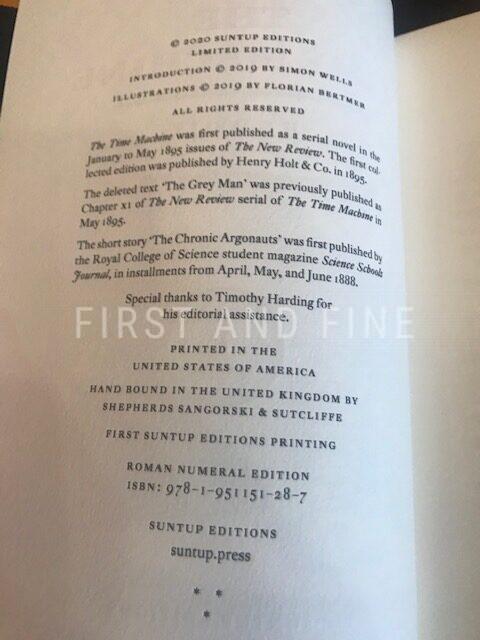
The Time Machine features an exclusive introduction by Simon Wells, great-grandson of H.G. Wells, and director of the 2002 film adaptation. The edition includes “The Chronic Argonauts,” an 1888 short story by H.G. Wells which the author refers to as, “the original draft of what became The Time Machine.” Also included is the long-lost eleventh chapter, “The Grey Man,” published during the novel’s serialization in the January to May issues of The New Review, excised from the first book edition published later that year.” Source: https://shop.suntup.press/products/the-time-machine-by-h-g-wells-roman-numeral-edition?_pos=3&_sid=edd07cca0&_ss=r
H.G. Wells’ most notable science fiction works include The Time Machine (1895), The Island of Doctor Moreau (1896), The Invisible Man (1897), The War of the Worlds (1898), and the military science fiction The War in the Air (1907). A renowned futurist and “visionary”, Wells foresaw the advent of aircraft, tanks, space travel, nuclear weapons, satellite television and something resembling the World Wide Web.
| Weight | 1.9 kg |
|---|
Sold
Out of stock
Related products
-
Bradbury, Ray (1950) ‘The Martian Chronicles’, US signed first edition with extra NASA Mars photographs signed by Bradbury
£7,500.00 -

McCarthy, Cormac (1998) ‘Cities of the Plain’, US deluxe signed limited edition
£2,500.00 -
Pasternak, Boris (2019) ‘Doctor Zhivago’, Folio Society limited edition and first edition in new translation, together with handwritten and signed original Pasternak letter
£5,000.00 -
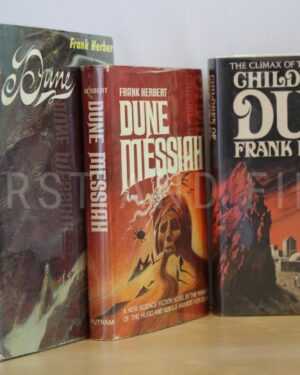
Herbert, Frank (1965-1976) ‘Dune’ trilogy, US signed first editions
£75,000.00